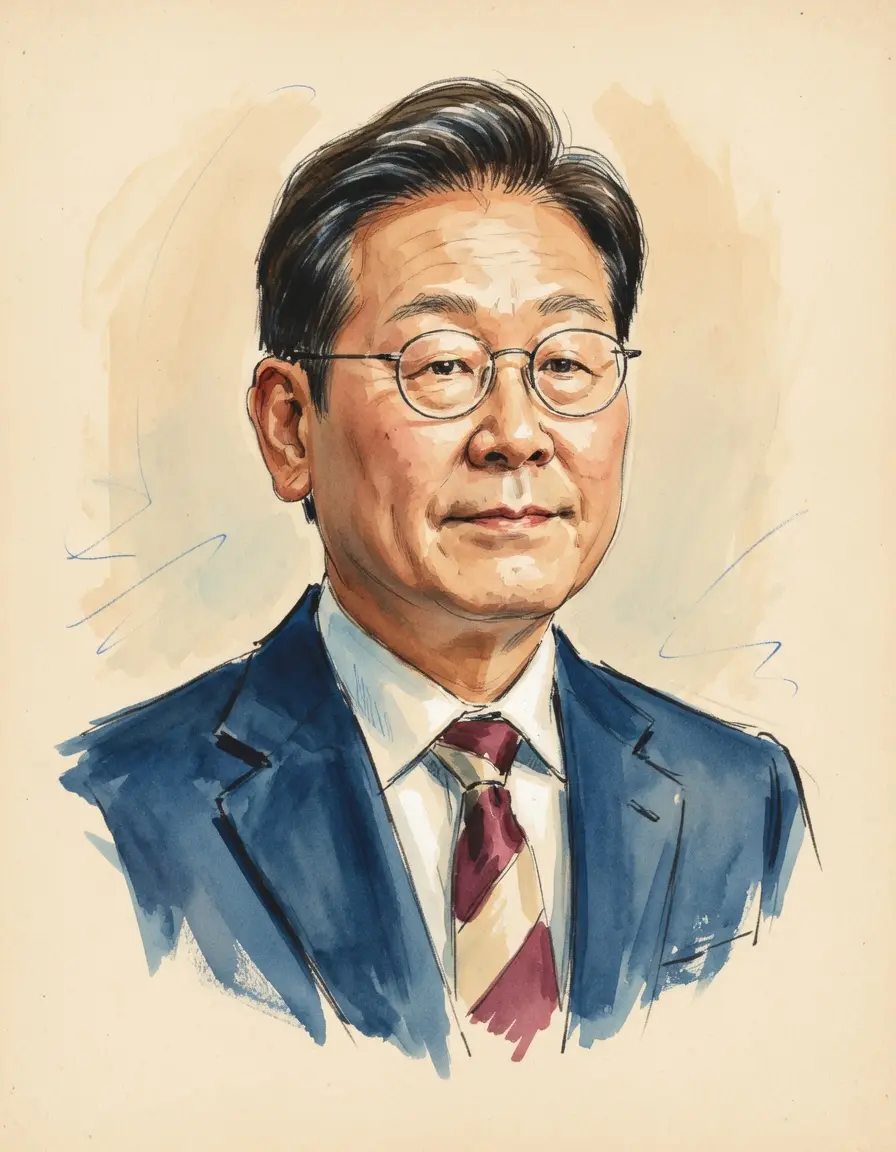
Lee Jae Myung on Foreign Policy
TL;DR
Lee Jae Myung champions pragmatic diplomacy centered on national interest while navigating US alliance commitments and China relations.
Key Points
He pledged to modernize the Republic of Korea–U.S. alliance to be more reciprocal and future-oriented following his summit with the U.S. President in August 2025.
Lee intends to pursue dialogue and cooperation with North Korea while maintaining strong deterrence, exemplified by halting loudspeaker propaganda broadcasts.
His administration aims to balance the security alliance with the U.S. against the economic interdependence with China, avoiding being drawn into the great power confrontation.
Summary
Lee Jae-myung seeks to guide South Korea's foreign policy through a strategy of pragmatic diplomacy, articulated in his inaugural address, which centers on maximizing national interest amidst volatile geopolitical shifts. This approach represents a deliberate move away from the perceived value-based diplomacy of his predecessor, aiming instead for a sophisticated strategy that balances principles with practical benefits and secures strategic autonomy. The foundation of this new orientation is explicitly stated as strengthening the Republic of Korea–U.S. alliance, bolstering trilateral cooperation with Japan, and managing relations with neighboring countries like China from a practical viewpoint, though he previously held more critical views of the alliance and Japan.
This strategic turn reflects an internal calibration between pro-alliance and pro-autonomy camps within his administration, aiming to reduce overreliance on any single power and enhance flexibility. While the U.S. alliance remains the security pillar, Lee's pragmatism necessitates maintaining economically vital ties with China, a stance that contrasts with more containment-focused perspectives and risks friction with allies expecting closer alignment. His immediate actions included halting propaganda broadcasts toward North Korea while simultaneously engaging in summit diplomacy with Japan, signaling a case-by-case approach driven by national interest rather than rigid ideology.
Key Quotes
choosing one side amid escalating U.S.–China tensions is “the most dangerous way of thinking.”
Frequently Asked Questions
Lee Jae Myung advocates for a foreign policy labeled as 'pragmatic diplomacy,' which is centered on South Korea's national interests. This approach seeks to balance traditional security commitments, such as the alliance with the United States, with the need to maintain functional economic and diplomatic relationships with neighboring powers like China.
He views the Republic of Korea–U.S. alliance as the pillar of South Korea's security and prosperity, committing to strengthen and modernize it. However, he seeks to make this relationship more reciprocal, implying a desire for greater strategic autonomy within the alliance framework.
Yes, his current position shows a marked shift from earlier criticisms; he has explicitly committed to strengthening trilateral cooperation with the U.S. and Japan. This cooperation is now framed as necessary for responding to regional security threats and economic uncertainties.
Sources7
Lee Jae-myung's Pragmatic Diplomacy: Between Alliance and Autonomy
How South Korea's New President Can Steady His Country's Wavering Foreign Policy
Lee Jae-myung's foreign policy successes in the shadow of political polarisation
South Korea's Lee Jae-myung Aims to Pursue Pragmatic Foreign Policy
Statesmen's Forum: His Excellency Lee Jae Myung, President of the Republic of Korea
South Korea's new president Lee Jae-myung brings uncertainty to Seoul's foreign policy
Experts react: What does South Korean President Lee Jae-myung mean for Indo-Pacific security?
* This is not an exhaustive list of sources.