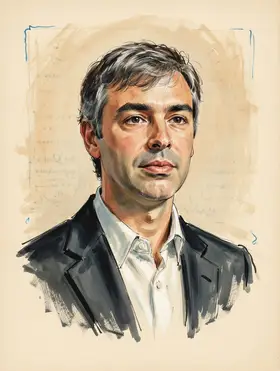
Larry Page
- Known for
- Co-founded Google, Search ranking algorithm
- Born in
- Lansing, USA
- Education
- Master of Science in computer science, Stanford University
Larry Page is the visionary computer scientist who co-founded Google with Sergey Brin, fundamentally reshaping how humanity accesses information. As a centibillionaire, his career is defined by relentless innovation, a focus on ambitious 'moonshots,' and a strategic shift toward structuring vast corporate entities for exponential growth.
Signature Positions
Page's leadership and technological philosophy centered on rapid, disruptive change:
- Search Engine Development: Co-created the PageRank algorithm, which became the foundation for Google's dominance in organizing the web.
- Management Style: Advocated for direct engineering oversight and speed, famously implementing a short-lived rule to 'Do not delegate' and striving for near-instantaneous query responses.
- Acquisition Strategy: Employed the 'toothbrush test' for acquisitions, prioritizing products used daily (like Android) over immediate profitability.
- Long-Term Vision: Championed the '10X' mentality—striving for solutions ten times better than the competition—and founded Calico to pursue 'moonshot thinking' in biotechnology.
- Corporate Structure: Orchestrated the reorganization into Alphabet Inc. to create management scale and separate core internet products from 'far afield' ventures.
How Views Have Evolved
Page's management approach saw significant shifts throughout his career.
Initially, as the first CEO, he exhibited an intense, hands-on style, famously attempting to fire all project managers because he disliked non-engineers supervising engineers.
After stepping down and returning in 2011, he prioritized collaboration, implementing a 'zero tolerance for fighting' policy and consolidating over 70 disparate products under the cohesive design initiative 'Project Kennedy'.
Page's influence extends beyond search into future technologies, evidenced by his early investment in Tesla Motors and his support for ventures like Kitty Hawk (aerial vehicles).
His later focus shifted toward socio-economic impacts, advocating for how advanced intelligent systems could shorten the workweek and mitigate technological unemployment, aligning him with thinkers focused on abundance.