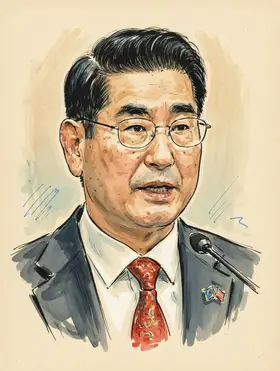
Kim Yong Hyun on Defence Policy
TL;DR
Kim Yong Hyun strongly advocates for deepening bilateral defense cooperation with allied nations, especially concerning Indo-Pacific security challenges.
Key Points
He co-chaired the second UNC Member States' Ministerial Meeting with Canada's Minister of National Defence in September 2024.
His resignation was accepted following the failed attempt to impose emergency martial law in December 2024.
He agreed with India's Defence Minister to work on the 'Road map for Defence Industry Corporation' via the Defence Policy Dialogue in November 2024.
Summary
Kim Yong Hyun, in his capacity as Minister of National Defense, has focused his defense policy stance on strengthening security partnerships with key allies like Canada and India. He actively engages in bilateral and multilateral forums to enhance cooperation against shared regional threats, particularly those emanating from North Korea’s actions and the deepening Russia-North Korea military ties. This collaborative approach is evident in his co-chairing of defense ministerial meetings and commitment to implementing existing strategic partnership action plans, which prioritize defense industry collaboration and policy dialogue.
His tenure has been marked by an emphasis on maintaining regional stability on the Korean Peninsula, often reaffirming the importance of frameworks like the United Nations Command. Furthermore, he has been engaged in discussions to boost defense industrial cooperation, including joint development on technology and research, as seen in meetings with counterparts to advance material cooperation roadmaps. This focus on active diplomacy and enhancing defense industry ties underpins his overall approach to national defense strategy.
Frequently Asked Questions
Kim Yong Hyun's defense policy centers on strengthening bilateral defense cooperation with key allies, particularly in response to evolving security threats in the Indo-Pacific region. He has actively promoted enhanced military and defense industry ties with partner nations. His engagement reflects a strategy of bolstering collective security frameworks to ensure regional stability.
Following the controversial, short-lived martial law declaration in December 2024, President Yoon Suk Yeol accepted the resignation of Kim Yong Hyun. This followed reports that the former Minister had recommended the martial law and ordered military deployment to the National Assembly. He and others faced subsequent accusations of state treason from the opposition.
Yes, the minister has actively pursued defense industry collaboration with allies. He participated in discussions aiming to deepen cooperation between the Canadian and Korean defense industrial bases. With India, he agreed to work on a roadmap for defense industry cooperation through established dialogue mechanisms.
Sources5
Minister Blair meets with the Republic of Korea's Minister of National Defense, Kim Yong-Hyun
Minister Blair meets with the Republic of Korea's Minister of National Defense, Kim Yong-Hyun
South Korean leader rejects resignation of Army Chief amid controversial martial law decision
Raksha Mantri meets his South Korean, Australian & New Zealand counterparts on the sidelines of 11th ASEAN Defence Ministers' Meeting-Plus in Lao PDR
Russia and North Korea's Comprehensive Strategic Partnership: Implications for Indo-Pacific Security
* This is not an exhaustive list of sources.