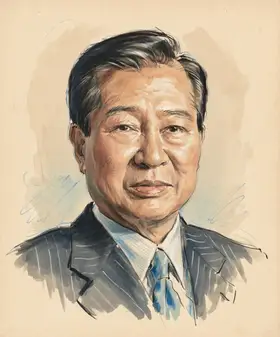
Kim Dae Jung on Sunshine Policy
TL;DR
Kim Dae Jung championed the Sunshine Policy, believing warmth and cooperation were superior to coercion for achieving inter-Korean peace and reconciliation.
Key Points
He officially proclaimed the Sunshine Policy at his presidential inauguration in 1998, proposing the first inter-Korean summit.
His implementation of the policy led to the historic first summit with Kim Jong Il in June 2000, resulting in the June 15th North–South Joint Declaration.
He was awarded the Nobel Peace Prize in 2000 specifically for his implementation of the Sunshine Policy towards North Korea.
Summary
Kim Dae Jung, as the South Korean president from 1998 to 2003, championed the Sunshine Policy, which was his flagship engagement strategy toward North Korea. Its core philosophy, derived from Aesop’s fable “The North Wind and the Sun,” asserted that kindness and mutual cooperation would be more effective than force or harsh containment in persuading the North to soften its stance and eventually disarm. Key to this approach was a commitment to peaceful coexistence rather than regime change or absorption, underpinned by three principles: no acceptance of military provocation, no attempt to annex the North, and active pursuit of peace and partnership.
The policy involved separating politics from economics, promoting inter-Korean trade and joint ventures like the Kaesong Industrial Complex, and facilitating humanitarian exchanges such as divided family reunions. Initially, the policy sought strict reciprocity, but this quickly evolved into a principle of “flexible reciprocity,” where the South, as the “elder brother,” would often provide aid without immediate expectation of reciprocation to build trust. This unique, non-confrontational approach earned Kim Dae Jung the 2000 Nobel Peace Prize for his efforts in improving inter-Korean relations.
Frequently Asked Questions
Kim Dae Jung strongly believed that engagement, characterized by warmth and cooperation, would be far more successful than force or containment in achieving lasting peace with the North. He sought to replace the Cold War-style confrontation with dialogue and mutual partnership. His philosophy was directly inspired by Aesop's fable where the sun's gentle warmth succeeded where the north wind's harshness failed.
The policy was based on three core principles: accepting no military provocation from the North, affirming that the South would not attempt to annex the North, and actively seeking peace and mutual partnership. A key practical component was the separation of politics and economics to encourage trade and aid despite political tensions.
The policy yielded significant early achievements, most notably the historic 2000 inter-Korean summit and increased family reunions. However, it faced domestic criticism and challenges, particularly when North Korea continued its nuclear program, leading to a cooling of relations later in his term.
Sources7
Sunshine Policy - Wikipedia
Sunshine policy | Korean history | Britannica
Kim Dae-Jung's Leadership as Relevant to the Sunshine Policy (1998-2003)
The Sunshine Policy of President Kim Dae-jung – Wholistic Peace Institute – Educating For Peace
KIM DAE JUNG AND THE SUNSHINE POLICY: AN APPEALING POLICY OPTION FOR INTER-KOREAN RELATIONS
President Kim and His Sunshine Policy: Twisting in the Wind - Comparative Connections
The Sunshine Policy of South Korea - Stanford University
* This is not an exhaustive list of sources.