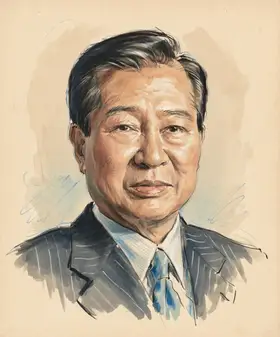
Kim Dae Jung on Kim Jong Il
TL;DR
Kim Dae Jung believed that engaging Kim Jong Il through dialogue was the only path toward security and economic development for the Korean peninsula.
Key Points
He held the first-ever inter-Korean summit with the Northern leader in Pyongyang in June 2000.
He stated that the North Korean leader was a "very normal person and is a very capable leader" upon meeting him.
The former president believed that improving human rights in North Korea was only possible through engagement and opening the country, not external criticism.
Summary
Kim Dae Jung viewed engagement with Kim Jong Il's regime as essential for achieving both security and economic development on the Korean peninsula, a policy termed the "Sunshine Policy." His core belief was that isolating the North was counterproductive, and that successfully mitigating the leader's fears through dialogue and partnership offered a path to change. This position culminated in the historic June 2000 summit in Pyongyang, where he engaged directly with the Northern leader, perceiving him to be a rational and capable leader once he felt respected. Kim Dae Jung asserted that North Korea needed to make friends with the U.S. and Japan, similar to how the South engaged China and Russia, to secure its future.
Despite the historic meeting and the reciprocal personal respect shown during the summit, the policy was fraught with challenges and criticism. The engagement led to allegations of illicit financial transfers to the North, known as the cash-for-summit scandal, which clouded the Nobel Peace Prize awarded to the president. Furthermore, the North was seen as exploiting the opening, as demonstrated by profiteering from tourism and continuing weapons development. Nevertheless, the former president maintained that engagement, rather than confrontation, was the only way to improve North Korean human rights by opening the country, even if progress was incremental and subject to the North's own misreading of political realities.
Key Quotes
No matter how much you criticize outside of North Korea, that doesn't improve North Korean human rights. The way to improve human rights is to open the country.
Frequently Asked Questions
Kim Dae Jung's main policy was the "Sunshine Policy," which emphasized engagement, dialogue, and reconciliation with the North Korean leadership under Kim Jong Il. He believed this approach was necessary to ease tensions and promote economic cooperation.
After their historic summit in 2000, Kim Dae Jung described the Northern leader as a very normal person with rich knowledge and good judgment. He believed that Kim Jong Il could be a good dialogue partner if he felt his security concerns were being addressed.
The policy resulted in a historic summit and improved personal relations, for which he received the Nobel Peace Prize. However, it was also significantly tainted by allegations of a cash-for-summit deal and was followed by North Korea resuming nuclear development.