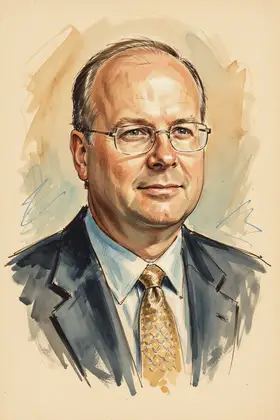
TL;DR
Karl Rove warns that the chaotic messaging surrounding the President's tariff policies risks significant electoral damage for Republicans.
Key Points
Warned in 2025 that chaotic trade talk could badly damage Republicans in the 2026 midterms.
Advocated for reciprocity in trade policy, suggesting the U.S. should compete when the playing field is level.
Noted market drops when the President rattles his trade saber and rebounds when tariff threats are walked back.
Summary
Karl Rove has expressed concern that the Republican Party faces substantial political jeopardy, particularly in the 2026 elections, due to the current administration's approach to trade and tariffs. He argued that the President's "chaotic trade talk" and the resulting uncertainty could lead voters to hold the GOP responsible for negative economic outcomes, such as inflation and scarcity of goods. Rove specifically pointed to polling showing the President is deeply underwater with the public regarding economic stewardship as evidence of this political vulnerability. He framed this as a key messaging challenge for his party moving forward.
He advocated for a strategy based on reciprocity, suggesting that the nation should compete freely when on a level playing field, an idea rooted in comparative advantage principles. Rove noted that market reactions, such as stock market declines, often occur when the President rattles "his trade saber" and reverse when tariff threats are walked back. He suggested that unless reciprocity prevails, the trade policy risks undermining Republican chances in elections, as voters will blame the party, not foreign countries, for domestic price increases that affect consumer goods and manufacturing components alike.
Key Quotes
Many U.S. manufacturers rely on some foreign components, and raising their prices will make their finished products more costly.
Frequently Asked Questions
Karl Rove currently views the administration's approach to tariffs as a potential political liability for the Republican Party. He expressed that the chaotic messaging surrounding trade policy could lead to negative electoral consequences in upcoming elections. His concern is rooted in the possibility that voters will attribute resultant economic pain directly to the President and his party, according to his commentary.
Rove has been a vocal critic of the perceived disorder within the President's trade strategy, warning about its negative impact on the GOP's standing. For example, he publicly rebuked the former President for boasting about the strength of the economy while simultaneously implementing policies that could raise prices. This suggests his criticism of the tariff messaging has been consistent in recent political commentary.
Karl Rove has stated that voters will blame Donald Trump and the Republican Party for higher prices or fewer goods if the trade policy remains a "muddled mess." He articulated this warning in the context of the 2026 elections, suggesting that economic fallout from tariffs could translate directly into lost seats for the GOP. He sees this as a critical messaging failure for the party.
Sources6
The Art of the 90-Day Tariff Pause
'They'll blame Donald Trump': Karl Rove warns tariffs will turn 2026 voters to Democrats, Navarro goes ballistic
Karl Rove: Trump tariffs could cost GOP their majorities
Trump wants the GOP to trust the process on his tariffs. They’re getting restless.
Karl Rove publicly rebuked President Trump for bragging about the strength of the economy: 'They’re not happy'
* This is not an exhaustive list of sources.