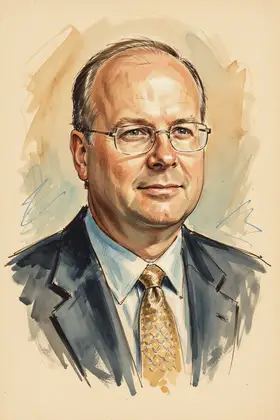
Karl Rove on Major Legislation
TL;DR
Karl Rove historically supported presidential agendas but recognized major legislation requires bipartisan consensus, which can be difficult to build.
Key Points
He was the architect of President George W. Bush’s successful campaigns, which informed the legislative priorities of that administration.
The effort to pass Social Security reform with private accounts following the 2004 election was analyzed as a strategic failure by the White House strategists.
He noted that major legislation needs a broad, solid political foundation built from the bottom up, as a crisis speeds up quick consensus, which was absent for Social Security reform.
He has discussed the state of American politics and leadership strategy in relation to major legislative goals in 2026.
Summary
Karl Rove, during his tenure as Senior Advisor to the President, was involved in the policy-making process and the push for the administration's legislative agenda. His role included coordinating the White House policy process, suggesting an active engagement with major legislation. However, analysis of the Bush administration's efforts on Social Security reform indicated that a top-down strategy for major legislation affecting large segments of the population was a strategic failure, highlighting a need for a different approach.
He later articulated that major legislation affecting numerous interest groups, like Social Security, historically demands a bottom-up, bipartisan foundation to succeed against inevitable politicization. The lack of an immediate crisis, unlike in the post-9/11 environment, made the push for private accounts particularly challenging without broad support. His commentary suggests that while an administration may have a mandate, success on complex legislation is contingent upon recognizing the political realities required for consensus.
Frequently Asked Questions
Karl Rove's perspective suggests that while a political mandate can help, passing major legislation, especially on complex issues like entitlements, requires a bottom-up, bipartisan foundation. According to analysis of his past work, he recognized that without an immediate crisis to foster unity, significant legislative change is difficult to achieve quickly. This implies a pragmatic understanding of the legislative process's constraints.
Yes, the former advisor stated that historically, legislation affecting large segments of the population requires a bipartisan approach to build a solid foundation for support. He implied that issues lacking an imminent crisis, such as Social Security reform, are highly susceptible to partisan division if that broad support is not established. This view emerged from post-mortems on White House legislative battles.
In a 2012 discussion, Karl Rove pointed to the Affordable Care Act as the first piece of major legislation to become less popular after it passed, according to Gallup polling data at the time. He used the unpopularity of the healthcare plan as a significant political weakness for the incumbent president leading into the election cycle. This criticism was made during a discussion on the 2012 presidential race.
Sources7
The Unbearable Heaviness of Governing
Karl Rove and Jim Messina Bring Bipartisan Conversation to NTEA Work Truck Week® 2026
Book Henry Waxman & Karl Rove for Public Speaking | Harry Walker Agency
Trump Losing Steam on Key Issues
Tancredo fires back at Karl Rove's tirade on Fox News - Colorado Politics
Karl Rove discusses 2012 presidential race | Liberty Champion
Bush, Rove and Social Security
* This is not an exhaustive list of sources.