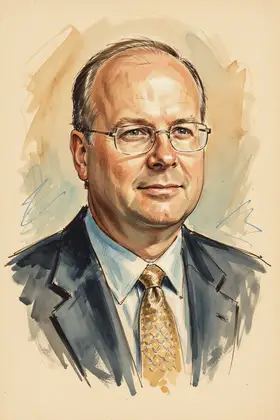
Karl Rove on Economic Policy
TL;DR
Karl Rove generally favors free-market principles, cautioning against government intervention like price caps to maintain economic health.
Key Points
He criticized the government's role, including Fannie Mae and Freddie Mac, and the Federal Reserve for keeping interest rates low for too long as contributing to the 2008 financial crisis.
Karl Rove publicly criticized President Trump for bragging about the economy while simultaneously pursuing tariff policies that he predicted would be electorally punishing.
During the 2001 California energy crisis discussions, he stated that the administration believed price caps would diminish supply rather than offer relief.
Summary
Karl Rove, during his tenure in the George W. Bush administration, consistently advocated for economic policies centered on free markets, competition, and limited government intervention. This stance was evident in discussions regarding the California energy crisis, where he strongly opposed price caps, arguing they would diminish supply and worsen shortages, instead favoring solutions focused on increasing supply and improving infrastructure like transmission grids. He emphasized that competition, conservation, efficiency, and new energy sources were the proper remedies for price relief, rather than governmental price controls.
His views suggest a belief that the public is skeptical of government solutions to economic problems, even when the media promotes a positive administration narrative. Rove has also been characterized as predicting that presidents will face electoral penalties if they push unpopular economic policies, such as tariffs that increase consumer costs without delivering promised benefits like job growth. This suggests a pragmatic alignment of conservative economic principles with political outcomes, where the perceived reality of the economy for working families drives voter behavior.
Key Quotes
If trading partners retaliate with tariffs on U.S. agricultural products and take their business elsewhere, farm country — Trump country — won't be happy
It'll be even worse if Mr. Trump and Republicans repeat one of Democrats' principle mistakes in the Biden presidency: insisting a bad economic policy is actually fine.
Frequently Asked Questions
Karl Rove's core position favors free-market solutions and is generally skeptical of extensive government intervention in the economy, according to his commentary. For instance, he voiced strong opposition to price caps during the 2001 energy crisis, preferring increased supply and competition as remedies, as stated in a 2001 White House briefing. He believes that the public holds leaders accountable for unfavorable economic realities, even if official narratives suggest otherwise.
Karl Rove's writings suggest his fundamental belief in market-oriented solutions remains consistent, although his focus shifts based on the contemporary political context. In a 2008 speech, he blamed government failures for the financial crisis, while in 2025, he warned a current president about the electoral risks of unpopular tariff policies. This indicates an evolution in addressing current Republican policies rather than a reversal of his pro-market instincts.
Karl Rove criticized President Trump's emphasis on tariffs, writing in a 2025 Wall Street Journal column that the president would own the negative consequences of jacking up import levies. He predicted this approach violated a cardinal rule of marketing by attaching the president's name to a policy that could make Americans financially worse off. Rove suggested such policies risk defections from the Republican base if economic conditions worsen.
Sources4
Press Briefing by Karl Rove, Senior Advisor to the President, Robert Mcnally, Special Assistant to the President for Economic Policy, and Gerald Parsky, Former California Bush Campaign Chairman
Talking Free Markets with Karl Rove
Voters Send the GOP a Warning
Democrats Ineffectual in Shaping Opinion
* This is not an exhaustive list of sources.