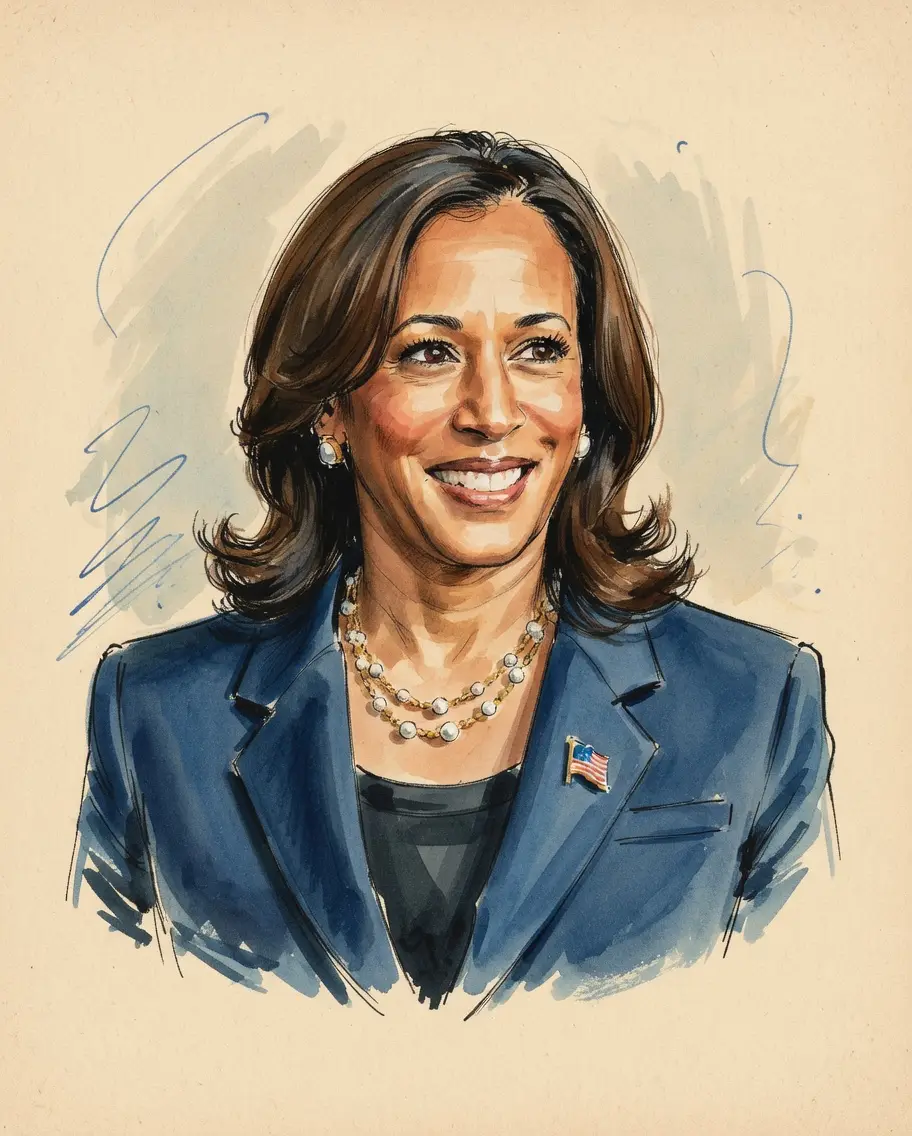
Kamala Harris on Global Economy
TL;DR
Kamala Harris advocates for rebuilding global economic alliances through strategic investment, fair trade, and industrial policy to counter rivals.
Key Points
She has expressed a desire to resolve trade disputes through negotiation rather than escalating tariffs, contrasting with more protectionist proposals.
The Biden-Harris administration retained previous administration tariffs on Chinese goods while also making targeted adjustments to those duties.
Harris supported legislation that cast the tiebreaking Senate vote for the Inflation Reduction Act, containing significant clean energy and manufacturing investments.
Summary
Kamala Harris’s approach to the global economy centers on strengthening American manufacturing and supply chains through strategic public investment and international collaboration. She champions a policy of 'de-risk, not decouple' regarding China, favoring resolution of trade disputes through negotiation over escalating tariffs, in contrast to a protectionist stance. A key element involves modernizing trade agreements, such as pushing for enhanced environmental and labor standards during the review of the United States-Mexico-Canada Agreement (USMCA). Her vision also integrates environmental considerations into trade policies, promoting green technologies globally.
Her platform, dubbed the 'opportunity economy,' emphasizes domestic investment in industries like bio-manufacturing and aerospace to ensure the United States leads in future technologies, which has implications for global competitiveness. This domestic focus, supported by significant public spending bills, aims to bolster the middle class and American industrial base. Furthermore, she has advanced global initiatives focused on gender equity within sustainable economies, signaling an intent to use international economic engagement to address broader social goals worldwide.
Key Quotes
“I believe we have an extraordinary opportunity to make our middle class the engine of Americas prosperity, to build a stronger economy where everyone, everywhere has a chance to pursue their dreams and aspirations, and to ensure that the United States of America continues to out-innovate and out-compete the world,”
“In our rapidly modernizing global economy, the Biden-Harris Administration is committed to ensuring women are prepared for, and part of, the industries of the future.
Frequently Asked Questions
Kamala Harris's main focus is on strengthening American manufacturing and supply chains through public investment and collaboration with international partners. She advocates for an economic approach that builds alliances and seeks to resolve trade issues through negotiation. This is framed as an 'opportunity economy' designed to boost the middle class.
As part of the current administration, Kamala Harris has maintained the substantial tariffs previously imposed on Chinese goods. However, her stated approach is to 'de-risk, not decouple' from China, favoring strategic management of competition over aggressive trade wars like those seen previously.
No, as a US Senator, Kamala Harris voted against the United States-Mexico-Canada Agreement (USMCA), criticizing it for inadequate environmental provisions. If elected, she would seek to use the USMCA's 2026 review to enhance environmental and labor standards.
Sources7
Kamala Harris's Foreign Policy Positions
Pre-Election Analysis: International Trade
Fact Sheet: Vice President Harris Launches Women in the Sustainable Economy Initiative, Totaling Over $900 Million in Commitments
Harris and Trump, the economy and the election
Harris says cost of living 'still too high' as she lays out economic agenda
Unpacking Kamala Harris' economic agenda
Kamala Harris Lays Out “Opportunity Economy” Plan To Boost American Families And Businesses
* This is not an exhaustive list of sources.