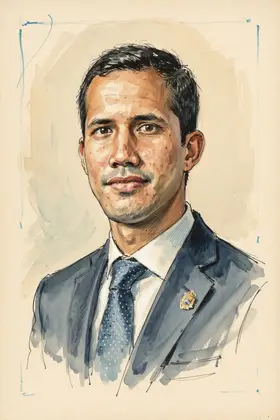
Juan Guaidó on Humanitarian Aid
TL;DR
Juan Guaidó viewed the entry of humanitarian aid as critical for preventing a national catastrophe and a test of the military's loyalty.
Key Points
Juan Guaidó announced the existence of a "humanitarian aid coalition" on February 2, 2019, involving Colombia and Brazil.
He explicitly called the February 23, 2019, aid delivery attempt a test for the military to choose sides between the leader in power and the Constitution.
His emergency government proposal included opening a channel for the immediate entry of medical supplies and food to address the crisis.
Summary
Juan Guaidó viewed the entry of humanitarian aid as a critical necessity to address Venezuela's complex and worsening humanitarian emergency and the collapse of the health system. His primary stance involved demanding that the regime allow international shipments of medical supplies and food to cross the borders. A key piece of evidence supporting this position was his announcement of a large-scale aid entry effort on February 23, 2019, which he framed as a critical test for the military's allegiance, forcing them to choose between supporting the sitting president or the needs of the Venezuelan people. He was insistent that humanitarian aid and financing from multilateral organizations were essential because the ruling regime was incapable of mobilizing them to confront the growing crisis.
His efforts to secure and deliver this aid were closely tied to his claim for legitimacy as the country's interim president, with the intended entry of aid serving as a direct challenge to the sitting president's authority. While some international observers noted that the operation was primarily political—designed to undermine the sitting president and provoke military defections—Guaidó emphasized the immediate and dire needs of Venezuelans facing potential famine. His interim government later secured commitments from multilateral organizations to address the emergency contingent on the formation of a transitional government.
Key Quotes
In a few weeks they will have to choose if they let much needed aid into the country, or if they side with Nicolas Maduro.
"This right now is an unprecedented emergency," Guaidó said during an April 23 event with the Atlantic Council moderated by journalist and CBS news contributor María Elena Salinas. "Venezuela cannot survive both a pandemic and a famine,"
Frequently Asked Questions
Juan Guaidó's main objective was to ensure the immediate entry of humanitarian aid, including food and medicine, into Venezuela to address what he termed a complex humanitarian emergency. According to reports from February 2019, he also intended the aid delivery to be a crucial test of the military's allegiance to his interim government rather than the sitting president. He saw the aid as critical for national survival amidst the ongoing crisis.
The initial, highly publicized effort led by Juan Guaidó to bring humanitarian aid across the borders on February 23, 2019, largely failed to enter the country. Reports indicated that border crossings were blocked by Venezuelan personnel with tear gas and force, and some aid trucks were burned. While only a small fraction entered, Guaidó claimed the effort proved the sitting president's violation of international law.
Juan Guaidó's interim government had secured commitments of $1.2 billion from multilateral organizations to address the emergency if the national emergency government was formed. According to an April 2020 statement, this financing was intended to allow for the immediate entry of medical supplies and food, as well as the allocation of direct resources to at-risk citizens. This contrasted with the sitting president's request for funding which was denied by the IMF.
Sources8
USAID Inspector 'Discovers' Guaidó's 'Humanitarian Aid ...
Venezuela crisis: Juan Guaidó vows to bring in aid
Going about it the wrong way: US 'Humanitarian' aid in ...
Guaidó's National Emergency Government can prevent a ...
npr.org
2019 shipping of humanitarian aid to Venezuela
Maduro against the world: humanitarian aid, interventions ...
High Noon over Humanitarian Aid at Venezuela's Border
* This is not an exhaustive list of sources.