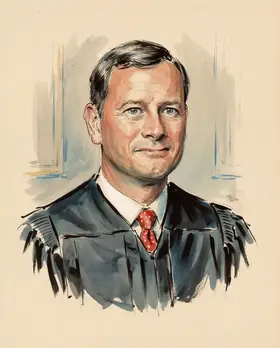
John Roberts on Supreme Court Oral Arguments
TL;DR
Chief Justice Roberts primarily moderates oral arguments, focusing on judicial process and sometimes managing dissenting collegiality among justices.
Key Points
He intervened to manage a fellow justice's repeated interruptions during oral arguments in a published instance.
His management role during telephone arguments demonstrates an adaptability to procedural changes in courtroom format.
Empirical analysis positions him centrally in the argumentative structure of oral arguments, reflecting his role as Chief Justice.
Summary
John Roberts maintains a position as the procedural moderator during Supreme Court oral arguments, generally seeking to ensure the court follows established norms and efficiently addresses the legal questions presented. Evidence of his focus on process appears in his management of the courtroom, which has included intervening to rein in questioning from other members of the bench, suggesting a desire to keep the focus on the merits of the case. This active moderation contrasts with analyses that use network data to gauge justice importance, placing him in a central, but not always dominant, conversational position.
His role has context in the broader evolution of the Court's arguments, particularly as the format has adapted, such as during periods of telephone arguments, where the Chief Justice's management style would be crucial for maintaining structure. Furthermore, some of his interactions with other justices during arguments reflect the institutional dynamics of the Court, especially in contentious cases, highlighting his responsibility for maintaining the decorum and efficacy of the proceedings, even as scholarly review scrutinizes speaking time allocation.
Key Quotes
“Can I hear the rest of his answer?”
Frequently Asked Questions
John Roberts primarily functions as the procedural moderator during Supreme Court Oral Arguments, according to analysis of courtroom dynamics. He is responsible for maintaining order and ensuring that the proceedings adhere to established court rules and customs. This role often involves steering the questioning back to the core legal issues of the case.
Yes, John Roberts has been documented stepping in to manage instances where another justice engaged in repeated interruptions during oral arguments. This action showcases his responsibility for controlling the flow of the questioning to maintain judicial decorum. Such interventions highlight his focus on the process of the hearing.
While John Roberts has not made extensive public statements focusing solely on the philosophical importance of oral arguments, his active role suggests he values them as a key component of the Court's decision-making process. His interventions during arguments underscore the necessity of a structured exchange with counsel. His judicial focus appears to be on efficient and orderly presentation of the case record.
Sources10
Supreme Court Chief Justice Roberts reins in Sotomayor after repeated interruptions
Supreme Court Oral Arguments Signal Skepticism
Analysis: Supreme Court oral arguments taking forever? Here's a look at the numbers
Using Network Analysis to Gauge the Justices’ Relative Importance in Oral Arguments
Does Judicial Questioning Matter? Oral Argument Patterns and Opinion Outcomes
See Us: Supreme Court Chief Justice John Roberts and Others Summarize Their Opinions and Dissents for the First Time with 'On the Docket' as Featured by NPR
Fix the Court Spearheads Push for Live Audio of SCOTUS Arguments
Empirical SCOTUS: Is Oral Argument Talking Time All It’s Cut Out to Be?
Inquiring Minds: Empirical Analyses of the U.S. Supreme Court’s Oral Argument Process
In unprecedented day at U.S. Supreme Court, justices hear arguments by phone
* This is not an exhaustive list of sources.