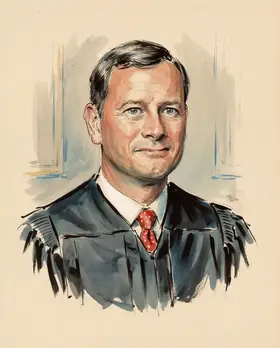
John Roberts on Presidential Immunity
TL;DR
Chief Justice Roberts authored the Court's opinion granting former presidents absolute or presumptive criminal immunity for core official acts.
Key Points
He authored the 6-3 majority opinion establishing that a former president has absolute criminal immunity for core constitutional powers.
The ruling provides that for remaining official acts, the president is entitled to at least presumptive immunity, with the government bearing the burden to rebut it.
He reportedly sent a private memo to his colleagues advocating for a ruling granting greater protection from prosecution to the former president.
Summary
John Roberts, as Chief Justice, authored the majority opinion in the seminal presidential immunity case, establishing a framework that grants former presidents significant protection from criminal prosecution for official acts. The Court divided presidential conduct into categories: unofficial acts receive no immunity, acts involving core constitutional powers receive absolute immunity, and other official actions receive at least presumptive immunity. The opinion emphasized that criminal liability risks chilling the necessary "vigor" and "bold and unhesitating action" required for the effective functioning of the Executive Branch, drawing heavily on precedent from civil immunity cases and Justice Jackson's concurrence in Youngstown.
The opinion remanded the specific case to lower courts to delineate which actions fell into the absolute versus presumptive immunity categories, but established the core principles protecting the former president. Critics argued the ruling effectively places the president "above the law," while defenders, including some analysts, suggested the opinion was narrow and primarily addressed the need to prevent cycles of partisan revenge prosecutions, though its language concerning core powers remains a subject of intense debate. The Chief Justice reportedly took an active role, pushing for a quick decision in favor of granting the protection.
Frequently Asked Questions
Chief Justice John Roberts authored the Supreme Court's majority opinion that granted broad criminal immunity to former presidents for official acts. His position, as articulated in the opinion, distinguishes between core presidential functions receiving absolute immunity and other official acts receiving presumptive immunity. This stance is primarily grounded in structural separation of powers concerns about ensuring an energetic executive branch, according to analysis of the ruling.
Yes, reports indicate that Chief Justice Roberts took an unusually active role in the presidential immunity case involving the former president. He reportedly sent a memo to his fellow justices advocating for the Court to hear the case and rule quickly in favor of granting greater protection. This advocacy preceded him writing the majority opinion himself, according to news investigations.
The Chief Justice framed the immunity based on constitutional structure and precedent, particularly from civil immunity cases like Nixon v. Fitzgerald. He stated that the framework is necessary so the President can take "bold and unhesitating action" without fear of criminal prosecution chilling decision-making. He rejected the idea that this made the president "above the law," as unofficial acts remain subject to prosecution.
Sources6
The Presidential Immunity Decision – Robert Delahunty & John Yoo
John Roberts, Inventor of Presidential Immunity, Has Thoughts About the “Excesses” of the Executive Branch
Chief justice Roberts pushed for quick immunity ruling in Trump's favor – report
Don't Overread the Court's Immunity Opinion
Breaking down the Trump immunity decision
Power and Immunity in Youngstown and Trump v. United States
* This is not an exhaustive list of sources.