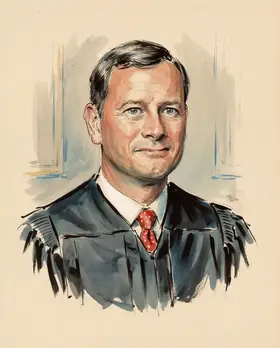
John Roberts on Birthright Citizenship
TL;DR
Chief Justice Roberts has focused on procedural issues like injunctions rather than explicitly ruling on the constitutional merits of birthright citizenship.
Key Points
He questioned the administration's solicitor general regarding the practicality of enforcing an executive order that restricts birthright citizenship.
During arguments on blocking an executive order, Chief Justice John Roberts specifically referenced the court's quick action in the TikTok case.
His approach, as noted in coverage of a May 2025 argument, appeared to downplay the implications of eliminating universal injunctions in the immediate term.
Summary
Chief Justice John Roberts has presided over Supreme Court proceedings concerning challenges to executive orders attempting to limit birthright citizenship, a constitutional principle rooted in the Fourteenth Amendment. His public focus, particularly during oral arguments in cases challenging such executive actions, has often centered on procedural mechanisms, such as the appropriateness and scope of nationwide injunctions that block policies pending final judgment. For instance, he noted the court's speed in a related case, suggesting a practical approach to managing such disputes, but avoided making a definitive statement on whether the executive order itself violated the amendment's guarantee that all persons born in the United States are citizens.
This focus on process over substance is consistent with his general judicial approach of institutionalism, which seeks to decide cases narrowly when possible. While the dissenting justices have been clear in supporting the constitutional basis for birthright citizenship, the conservative majority, including Roberts, appeared divided on procedural questions during arguments, delaying a direct ruling on the merits of narrowing the constitutional text. Observers suggest Roberts may prefer a resolution that maintains the Court's authority and limits judicial overreach, even if it means postponing a final, potentially divisive decision on the core constitutional question itself.
Frequently Asked Questions
John Roberts's explicit position on the constitutional merits of limiting birthright citizenship remains undefined in public reports. According to analyses of oral arguments, he has primarily focused on procedural questions, such as the limits of a judge's power to issue nationwide injunctions against executive policies. He tends to favor narrow rulings that avoid broad constitutional pronouncements when possible, as seen in reports from May 2025.
The Chief Justice was part of the majority that decided on the procedural question of whether to block the enforcement of an executive order limiting birthright citizenship nationwide. The decision, reported in June 2025, rejected the use of universal injunctions but avoided a direct ruling on the underlying constitutionality of the executive order itself. Therefore, he participated in a decision that impacted the order's implementation but did not settle the core constitutional debate.
In arguments regarding an executive order attempting to change birthright citizenship, John Roberts reportedly steered the discussion toward procedural matters like nationwide injunctions. He compared the situation to the court's swift action on the TikTok case, suggesting a practical way to manage the immediate legal conflict. This focus on court procedures, rather than the history or text of the Fourteenth Amendment, characterizes his engagement with the issue, according to legal commentary from May 2025.
Sources10
Birthright citizenship: legal takeaways of mice and men and ...
The dog that didn't bark on birthright citizenship
John Roberts can't split the difference on birthright citizenship
Supreme Court's decision on birthright citizenship will ...
Supreme Court justices appear divided in birthright ...
Trump's fight to redefine 'American citizen' returns ...
US Supreme Court hearing on birthright citizenship cases
US Supreme Court to make decisions before end of term
* This is not an exhaustive list of sources.