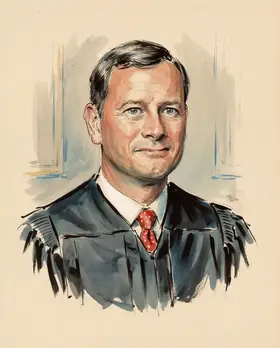
John Roberts
71 years old·Republican Party·Chief Justice of the United States
- Known for
- Chief Justice of the US, Conservative jurist
- Born in
- Buffalo, United States
- Education
- Juris Doctor, Harvard Law School
John Roberts is the 17th Chief Justice of the United States, known primarily as an institutionalist with a moderate conservative judicial philosophy. Though seen as a potential swing vote, he has overseen a significant conservative shift on the Supreme Court during his tenure.
Signature Positions
Roberts's tenure has been marked by key decisions shaping modern jurisprudence:
- Health Care Reform: Authored the majority opinion in NFIB v. Sebelius, upholding the Affordable Care Act by reinterpreting the individual mandate as a tax.
- Affirmative Action: Wrote the majority opinion in Students for Fair Admissions v. Harvard, overruling race-based admission programs in higher education.
- Presidential Power: Established a framework for presidential immunity from criminal prosecution in Trump v. United States (2024), balancing effective executive function against criminal enforcement.
- Voting Rights: Voted to strike down the preclearance provisions of the Voting Rights Act in Shelby County v. Holder (2013).
How Views Have Evolved
Roberts has shown a surprising willingness to vote with the liberal wing to preserve the Court's legitimacy and precedent.
- He joined a 5-4 majority to uphold the ACA mandate, marking a moderate stance against the more conservative wing.
- Roberts initially respected Roe v. Wade as settled law, but recently declined to join the majority opinion overturning it in Dobbs v. Jackson.
Notable Tensions
Roberts’s judicial approach often balances conservative aims with institutional preservation, creating notable tensions:
- Judicial Moderation vs. Conservative Bloc: Despite his moderate conservatism, the current makeup of the Court means Roberts is often outvoted by the more conservative bloc, as seen following Justice Barrett's confirmation.
- Abortion Precedent: While he acknowledged Roe as settled law during his confirmation, he recently voted only to uphold the Mississippi statute in Dobbs, not joining the full opinion that overturned Roe and Casey.
- Impeachment Trials: Presided over Donald Trump's first impeachment trial but abstained from the second, citing constitutional limits on the Chief Justice's role regarding former presidents.