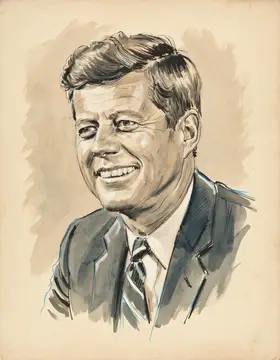
John F. Kennedy on Segregation
TL;DR
John F. Kennedy ultimately treated segregation as a profound moral failure that required decisive federal legislative action.
Key Points
He publicly condemned segregation as a "moral issue" in his June 11, 1963, televised address, demanding new legislation.
His administration began initiating Justice Department lawsuits to enforce existing laws, such as those banning segregation on interstate transportation, following the 1961 Freedom Rides.
The civil rights bill he proposed to Congress in June 1963 included provisions to end segregation in public accommodations and speed up school integration.
Summary
John F. Kennedy, initially cautious on civil rights to avoid alienating Southern Democrats whose support he needed for other legislation, evolved his position substantially during his presidency due to escalating racial tensions and activism. Early in his term, his administration favored executive action and relied on legal arguments to enforce existing rulings, such as deploying marshals during the 1961 Freedom Rides to protect the constitutional right to travel. However, after events like the violent resistance to James Meredith’s enrollment at the University of Mississippi and the brutality during the Birmingham Campaign, Kennedy concluded that stronger, legislative support was a moral and political necessity.
This pivotal shift culminated in his televised address to the nation on June 11, 1963, where he framed segregation as a fundamental moral crisis, asserting it was "as clear as the American Constitution." In that address, he proposed comprehensive civil rights legislation that directly challenged segregation in public accommodations and education. Despite his assassination in November 1963, his proposed bill became the foundation for the landmark Civil Rights Act of 1964, solidifying his legacy as a key proponent against segregation.
Frequently Asked Questions
John F. Kennedy was initially cautious regarding desegregation, preferring executive action over major legislation to avoid alienating Southern Democrats whose support he needed for his broader domestic agenda, according to historical accounts. He primarily justified his early actions, like sending marshals to protect Freedom Riders, on legal grounds rather than moral ones.
Kennedy's stance shifted notably in the spring of 1963, particularly after witnessing the violent response to civil rights protests in Birmingham, Alabama. This led him to call Americans to recognize civil rights as a moral cause in his June 11, 1963, speech.
President Kennedy asked Congress to enact legislation that would guarantee all Americans the right to be served in public accommodations like hotels and stores, and also authorize the federal government to more actively participate in lawsuits to end segregation in public education. This was announced in his June 1963 televised address.
Sources9
Civil Rights Movement - JFK Library
Report to the American People on Civil Rights - Wikipedia
The Kennedys and the Civil Rights Movement (U.S. National Park ...
Civil Rights Act (1964) | National Archives
Civil Rights Announcement, 1963 | American Experience | Official ...
John F. Kennedy's Civil Rights Speech (Washington, DC) — Civil ...
John F. Kennedy (1961–1963): Civil Rights and Interstate Transportation - The Eno Center for Transportation
The Civil Rights Act of 1964 | Miller Center
* This is not an exhaustive list of sources.