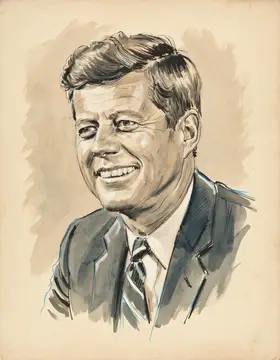
John F. Kennedy on Leadership
TL;DR
John F. Kennedy viewed effective leadership as requiring courage, inspiration, and a commitment to public service and national purpose.
Key Points
He believed leadership demanded a high degree of personal courage and a readiness to take political risks for principle.
Kennedy stressed that leaders must articulate a compelling vision that inspires citizens toward active participation in national endeavors.
His concept emphasized the executive's role in generating energy and dynamism within the government structure to address pressing issues.
Summary
John F. Kennedy positioned leadership as an active, engaged role demanding a clear vision coupled with the moral courage to pursue difficult goals. His concept centered on inspiring a sense of national purpose and mobilizing the public and the government toward shared objectives, notably during the Cold War era. He emphasized that leaders must be willing to take risks and make tough decisions for the greater good, believing that a dynamic executive branch was necessary to meet contemporary challenges, as evidenced by the creation of new agencies and initiatives during his presidency.
This outlook evolved from his earlier political career, focusing increasingly on the high stakes of the modern era. He saw leadership not merely as administrative management but as a catalyst for societal change and moral progress. The implication of his views was a call for a new generation of leadership characterized by vigor and a dedication to idealism, contrasting sharply with perceived stagnation. This emphasis placed a premium on communication skills to articulate this vision effectively to both domestic and international audiences.
Frequently Asked Questions
According to analyses of his published works, John F. Kennedy's core philosophy saw leadership as intrinsically linked to courage and a clear, inspiring national purpose. He believed leaders must be proactive agents of change rather than passive administrators, as stated in multiple biographical sources. This required communicating a compelling vision that motivated the nation to address complex challenges.
John F. Kennedy’s writings suggest leadership is developed through experience, challenge, and a commitment to service, rather than being solely an inherent trait. Analyses indicate that he valued demonstrated action and the ability to learn from difficult circumstances, suggesting a moldable quality. This viewpoint is often highlighted in studies compiling his various speeches and statements on the subject.
John F. Kennedy highly valued intellectual curiosity, decisiveness, and a deep commitment to the public good in leaders, according to compiled texts on his views. He often stressed the need for leaders to be willing to confront difficult truths and act with conviction, even when unpopular. These qualities, he suggested, were essential for navigating the intense pressures of the presidency during the Cold War.
Sources9
John F. Kennedy on Leadership: The Lessons and Legacy of a President
John F. Kennedy on Leadership
Books - John F. Kennedy on Leadership: The Lessons and Legacy of a President
John F. Kennedy on leadership : the lessons and legacy of a presi
EY John F. Kennedy Library Foundation Certificate
John F. Kennedy on Leadership: The Lessons and Legacy of a President by John A Barnes - NOOK Book
John F. Kennedy Leadership by Barnes, John - eBook
John F. Kennedy On Leadership: The Lessons and Legacy Of A President by John A Barnes (Paperback)
* This is not an exhaustive list of sources.