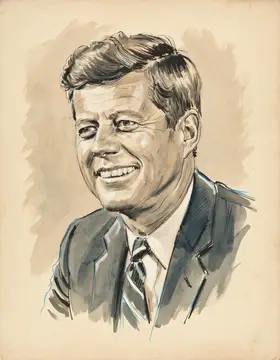
John F. Kennedy on Jawaharlal Nehru
TL;DR
John F. Kennedy perceived Nehru as an important non-aligned leader while harboring personal reservations about his foreign policy positions.
Key Points
The President reportedly characterized Nehru's November 1961 visit as the "worst head-of-State visit" according to posthumous accounts.
Kennedy, even as a Senator, highlighted the competition between India and China for leadership in Asia, proposing significant US aid for India.
The US administration took steps to counter the Sino-Indian War impact, including dispatching the USS Kitty Hawk to the Bay of Bengal after a request for aid from the Prime Minister.
Summary
John F. Kennedy viewed Jawaharlal Nehru as a significant world leader in the context of the Cold War, particularly recognizing India's importance in the struggle for leadership in the East against China, as expressed in speeches before his presidency. Kennedy's administration prioritized strengthening ties, exemplified by planning substantial aid for India to revitalize its economy and counter the Soviet-assisted growth of China. However, behind the diplomatic interactions, there were reported personal and policy frictions between the administrations, including the US president reportedly calling Nehru's 1961 visit one of the worst head-of-State visits.
Despite underlying diplomatic tensions, especially surrounding the Sino-Indian War, the administration sought engagement, exemplified by a US Ambassador who was attuned to India's needs and even overruled proposals to offer India nuclear weapons, predicting Nehru would denounce it. The US demonstrated support during the 1962 conflict by dispatching a naval vessel to the Bay of Bengal following Nehru's request for significant air defense assistance. Furthermore, a book referencing private conversations suggests the personal dynamic was strained, with the First Lady expressing strong negative feelings toward Nehru's daughter, which complicated the high-level diplomatic engagement.
Frequently Asked Questions
John F. Kennedy maintained a stance of diplomatic engagement with Jawaharlal Nehru, recognizing India's importance as a non-aligned nation during the Cold War. However, declassified information and posthumous accounts suggest he held personal reservations about Nehru’s company and diplomatic approach. The President's administration sought to support India while navigating complex regional alliances, according to historical reviews.
The relationship between John F. Kennedy and Jawaharlal Nehru appears to have been mixed, characterized by strategic necessity over personal warmth. While Kennedy expressed public recognition of India's geopolitical role, private commentary attributed to him regarding a state visit was notably negative. A book reviewing private conversations also indicated personal friction between the respective First Ladies, suggesting complexity in the personal diplomacy.
Before becoming president, John F. Kennedy spoke strongly about the struggle for influence in Asia, specifically naming the competition between India and China. According to a 1959 speech, he believed this struggle deserved significant American attention and proposed substantial economic aid to revitalize the Indian economy. He viewed India as a critical player in denying the Communists an opportunity to gain influence in newly liberated regions.
Sources4
John F Kennedy, his wife Jacqueline did not vibe well with Jawaharlal Nehru, Indira Gandhi: Book
The Himalayan Blunders Of Nehru As Stated In 'JFK's Forgotten Crisis'
President Kennedy's Remarks Upon Arrival of Prime Minister of India Jawaharlal Nehru
this was how president john f kennedy received prime minister jawaharlal nehru w
* This is not an exhaustive list of sources.