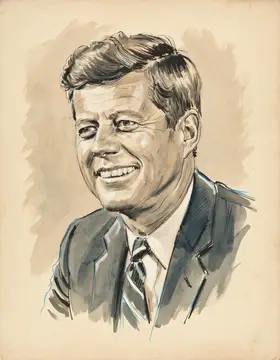
John F. Kennedy on Islam
TL;DR
John F. Kennedy's direct positions on Islam are not explicitly detailed, but his Catholic faith implied a commitment to religious tolerance.
Key Points
His election as the first Catholic president highlighted the national debate on religious tolerance in the U.S. political sphere.
There is no readily available primary source material detailing major policy positions by John F. Kennedy specifically targeting Islam or Muslim communities.
His foreign policy in the Middle East focused primarily on containing Soviet influence and maintaining strategic relationships with oil-producing nations.
Summary
John F. Kennedy’s public record offers scant direct commentary specifically about the religion of Islam itself, as his presidency was dominated by Cold War concerns. However, his historic identity as the first Catholic president suggests an implicit stance rooted in promoting religious liberty and tolerance for all faiths. His supporters often cited his own experience facing religious prejudice as a foundation for respecting the rights of other minority religions to practice freely.
While there is no evidence of him engaging in the political rhetoric or policy debates concerning Islam prevalent in later decades, his philosophical commitment to the separation of church and state and freedom of conscience, fundamental to his election, would logically extend to the Muslim community. His administration’s foreign policy focus was geopolitical, aimed at non-Communist allies in the Middle East, which included nations with large Muslim populations.
Frequently Asked Questions
John F. Kennedy's direct public statements specifically addressing the religion of Islam are not widely documented in historical records. His presidency was largely focused on Cold War dynamics with the Soviet Union and Cuba. However, as the first Catholic president, his core political stance championed religious tolerance for all faiths in America.
While specific quotes on Islam are scarce, John F. Kennedy's political platform heavily emphasized religious freedom, a necessary component of his successful campaign. His supporters argued that his own fight against anti-Catholic bias made him a natural advocate for the constitutional rights of all religious minorities, which would include Muslims.
John F. Kennedy's foreign policy toward Muslim-majority nations, particularly in the Middle East, was primarily driven by Cold War strategy. The main objective was counterbalancing the influence of the Soviet Union and securing stable relationships with key regional partners.
Sources5
Kennedy and Farrakhan: One-on-One (Interview)
Islam in America | Council on Foreign Relations
U.S. Presidential Visits to Domestic Mosques
Nation Of Islam - Hartford Institute
Nation Of Islam - Hartford Institute
* This is not an exhaustive list of sources.