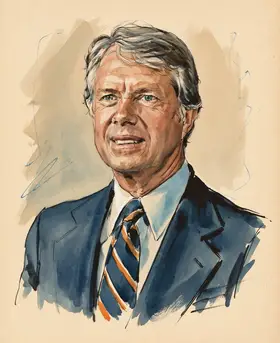
Jimmy Carter on Panama Canal Treaty
TL;DR
Jimmy Carter strongly advocated for and ultimately secured Senate ratification of the Torrijos-Carter Treaties, granting Panama control of the Canal.
Key Points
He signed the two Torrijos-Carter Treaties on September 7, 1977, with General Omar Torrijos.
The U.S. Senate ratified the Neutrality Treaty on March 16, 1978, and the Panama Canal Treaty on April 18, 1978, both by a 68-32 margin.
Carter signed the legislation implementing the treaties into law on September 27, 1979, ensuring the final turnover occurred on December 31, 1999.
Summary
Jimmy Carter made concluding the negotiations for the Torrijos-Carter Treaties a high priority upon taking office, despite having previously expressed opposition during his 1976 campaign. He viewed the eventual transfer of the canal as a necessary step to establish fairness and mutual respect in U.S. relations with Latin America, believing the 1903 treaty had become an obstacle. Carter worked to secure bipartisan support and successfully lobbied Congress, which ratified the two treaties—one on neutrality and one on the transfer of control—in 1978. He signed the implementation legislation into law in 1979, solidifying the commitment to hand over the canal to Panama by December 31, 1999.
Despite strong opposition from conservatives who viewed it as surrendering a strategic asset, Carter framed the agreement as a symbol of the United States’ commitment to fairness over force. He, alongside his predecessors, recognized that failure to reach an accord risked regional unrest and international condemnation, viewing diplomacy as the superior strategy to secure long-term access and defense of the waterway. His predecessor, Gerald Ford, also supported the treaty framework, and the negotiations spanned four presidential administrations, evolving from earlier draft agreements.
Key Quotes
This agreement is a symbol for the world of the mutual respect and cooperation among all our nations.
...the treaty opened the way to a new era of mutual respect, equality and friendship between our peoples.”
Frequently Asked Questions
Jimmy Carter's core stance was one of strong advocacy for the ratification of the Torrijos-Carter Treaties. He viewed the treaties as the necessary, fair, and decent path to improve relations with Latin America and secure the waterway's future operation and neutrality, according to his statement at the signing ceremony.
No, Jimmy Carter's position evolved; during the 1976 election, he vowed not to surrender practical control of the Canal Zone in the foreseeable future. However, after consulting with advisors, he made concluding the negotiations a priority once in office, ultimately securing the transfer.
President Carter stated at the signing that the treaties marked a commitment to the belief that fairness, not force, should guide international dealings. He believed the American people would eventually see the treaty as a popular accomplishment once they understood the unfairness of the previous arrangement.
Sources5
September 7, 1977: Statement on the Panama Canal Treaty Signing
The Panama Canal and the Torrijos-Carter Treaties - Milestones in U.S. Foreign Relations
Torrijos–Carter Treaties - Wikipedia
The Panama Canal Treaty Declassified | National Security Archive
No, Jimmy Carter’s Panama Canal Treaty Didn’t Make Ronald Reagan President – The Democratic Strategist
* This is not an exhaustive list of sources.