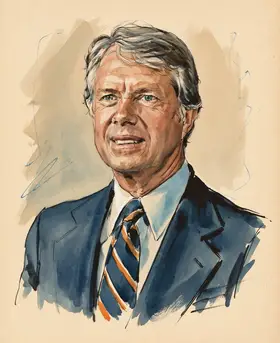
Jimmy Carter on Nuclear Energy
TL;DR
Jimmy Carter, a former Navy nuclear engineer, later became a strong proponent of energy conservation over nuclear power expansion.
Key Points
As president in 1977, he addressed the nation regarding the need for energy conservation and questioned the rapid expansion of commercial nuclear power.
He initiated a comprehensive review of the US commercial nuclear power industry, leading to a slowdown in new reactor licensing.
His administration actively promoted renewable energy sources, such as solar electricity, as part of a strategy to reduce energy dependence.
Summary
Jimmy Carter's involvement with nuclear energy began long before his presidency, stemming from his service as a United States Navy nuclear engineer, a role that provided him with firsthand technical knowledge of the technology. Upon entering the White House in 1977, he took a position that marked a significant shift, calling for a substantial slowdown in the expansion of nuclear power generation in the United States. This stance was largely influenced by safety and proliferation concerns following the Three Mile Island accident and his administration's broader push for energy efficiency and renewable sources.
Following his presidency, this skepticism toward large-scale nuclear projects appeared to solidify, as his administration emphasized conservation and the development of alternative energy technologies like solar power. Despite his initial technical background, the former president's public stance evolved to favor a reduced reliance on nuclear power plants, prioritizing conservation efforts as a safer and more sustainable path for national energy security.
Frequently Asked Questions
Jimmy Carter had a professional background as a United States Navy nuclear engineer, which provided him with specialized knowledge of nuclear reactors. He served in the program under Admiral Hyman G. Rickover before his political career. This experience shaped his later, more cautious, views on the technology's civilian application.
No, the former president did not support the rapid expansion of nuclear power during his term. He addressed the United Nations in 1977 calling for careful consideration of nuclear power, citing proliferation and safety risks. Instead, his administration strongly favored energy conservation and alternatives to nuclear generation.
Yes, Jimmy Carter's stance appears to have evolved from his technical role as a nuclear engineer to a more cautious and critical view as president. He became a strong advocate for energy efficiency and renewable alternatives over building new nuclear reactors, according to his public statements and policies.
Sources5
How President Jimmy Carter's nuclear legacy touches Knoxville, Oak Ridge
Address to the Conference on Nuclear Energy, United Nations, New York City
Jimmy Carter, ILSR and the Evolution of Solar Electricity
Jimmy Carter was a former Navy nuclear engineer whose career in public service helped shape the nation's energy future.
The Nuclear Engineer Who Introduced Solar Panels to the White House
* This is not an exhaustive list of sources.