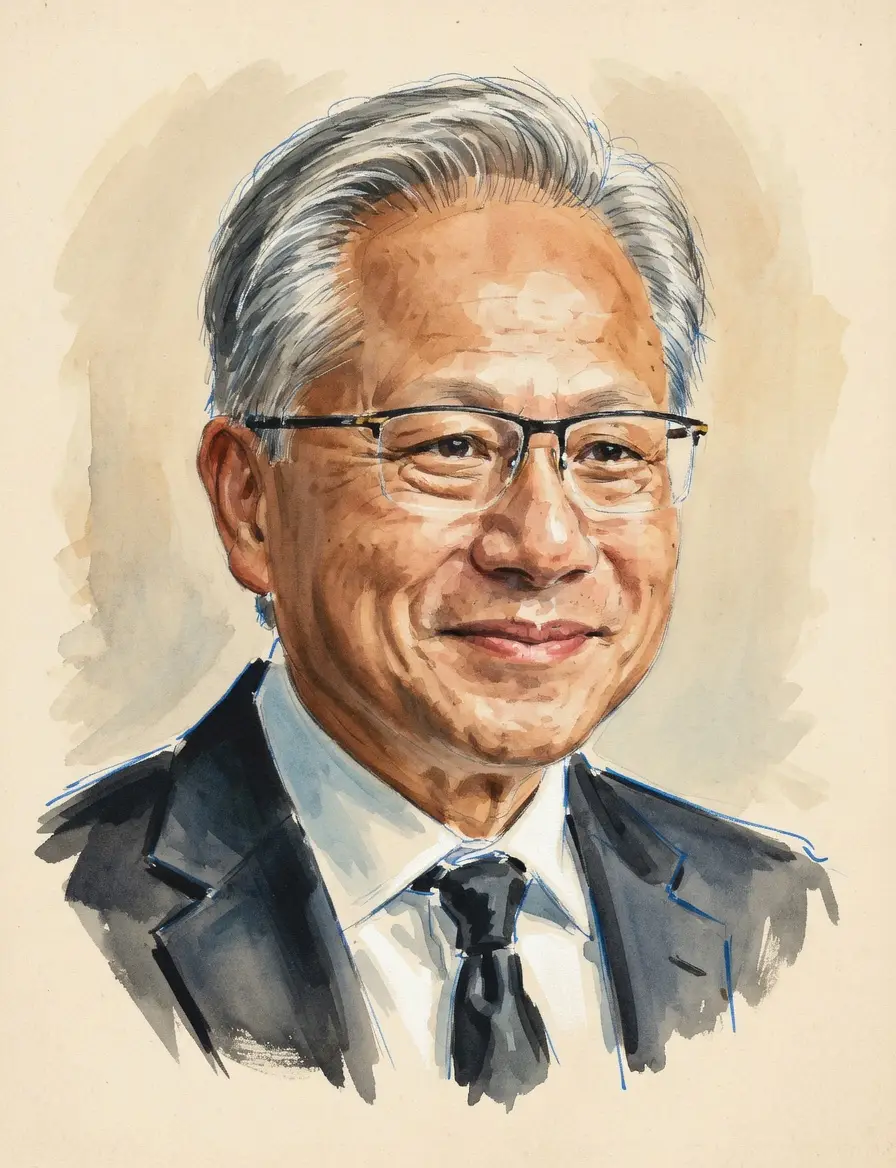
Jensen Huang on Tariffs
TL;DR
Jensen Huang views tariffs as a visionary tool accelerating the crucial reindustrialization and onshore manufacturing of advanced chips in the United States.
Key Points
He stated that the impact of tariffs will not be meaningful in the near term on the company's financials.
The CEO praised the tariff plan as a catalyst that helped drive the domestic production of AI chips.
He is actively encouraging partners to invest in the United States, citing the current policy as a reason for this shift.
Summary
Jensen Huang has voiced strong support for tariffs, specifically characterizing a recent tariff plan as "utterly visionary" because he sees it as a driving force for domestic production. He credited the tariffs, alongside the desire of a former president to reindustrialize the nation, as a "pressing agent" that enabled his company to manufacture the most advanced AI chips in America for the first time within a relatively short period. He expressed excitement about this transformative idea, which he believes will shape the next century and is encouraging partners worldwide to invest in the United States based on this industrial shift.
He further stated that tariffs are part of a bold vision to onshore manufacturing and motivate global investment in the US, indicating a positive view on the policy's effect on the semiconductor industry's geographical footprint. While he has also indicated that the near-term financial impact from tariffs may not be significant, his emphasis remains on the long-term structural benefits, particularly in building out the necessary infrastructure for the AI-powered industrial revolution domestically. The CEO hopes to increase onshore manufacturing capabilities as a result of this policy environment.
Frequently Asked Questions
Jensen Huang holds a positive view of tariffs, framing them as a visionary catalyst for reindustrialization. He believes this policy has accelerated the ability for his company to manufacture cutting-edge AI chips within the United States. His position centers on the long-term strategic benefit of onshore manufacturing.
Yes, Jensen Huang praised the tariff plan, calling it "utterly visionary" in a public interview. He credited the policy for making it possible for the US to manufacture the most advanced AI chips. He views this policy as transformative for the country's industrial future.
While acknowledging the policy's structural impact, he stated that the impact of tariffs should not significantly hurt financials in the near term. He has also expressed hopes to increase onshore manufacturing capabilities in the US. His overall sentiment appears to prioritize the industrial policy goals over short-term financial concerns related to the tariffs.
Sources4
Nvidia CEO Jensen Huang says tariff impact won't be meaningful in the near term
Nvidia CEO Jensen Huang says Trump's tariff plan is 'utterly visionary'
Nvidia CEO touts new AI 'industrial revolution,' praises Trump tariffs for role in chip production
Nvidia CEO Huang says tariffs shouldn't significantly hurt financials, hopes to increase onshore manufacturing
* This is not an exhaustive list of sources.