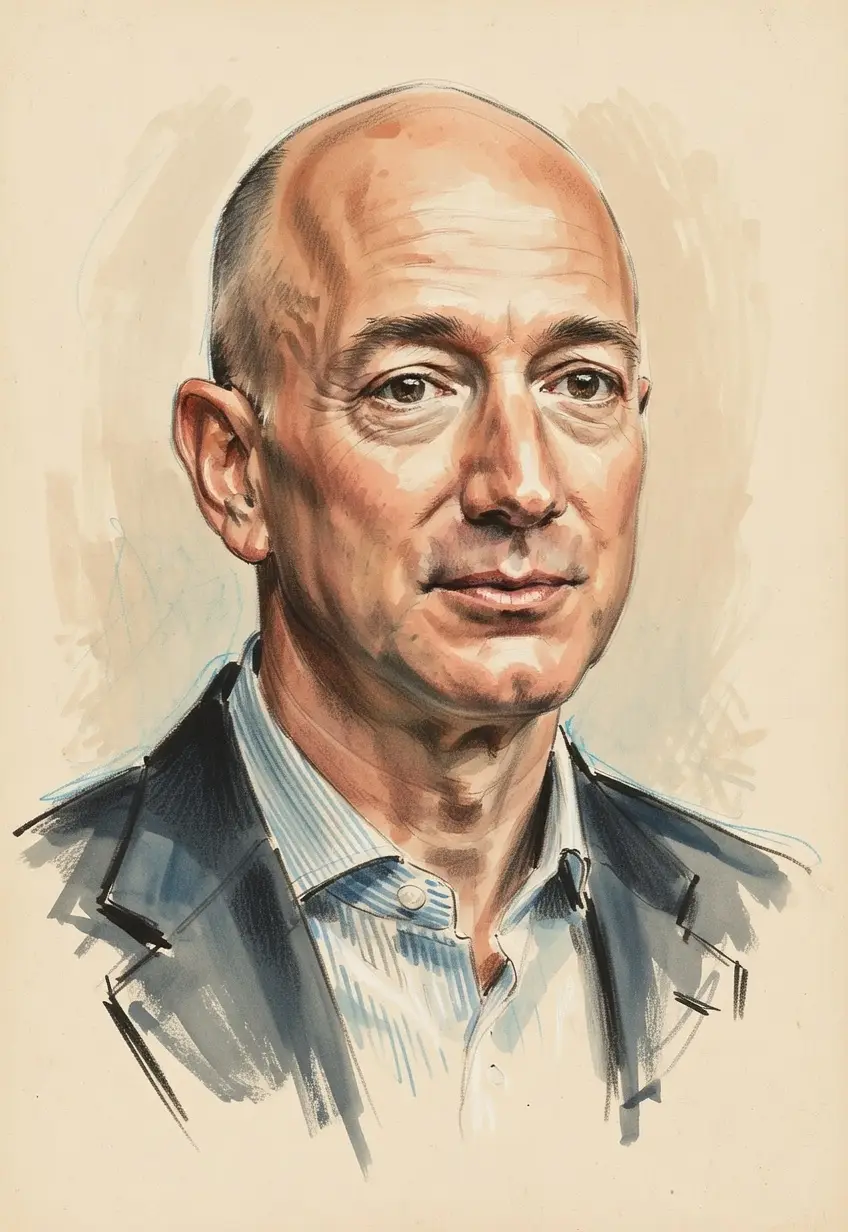
Jeff Bezos on Space
TL;DR
Jeff Bezos views building space infrastructure, primarily through Blue Origin, as essential for humanity's long-term future and economic expansion.
Key Points
He founded Blue Origin in 2000, initially exploring unconventional launch technologies before focusing on reusable chemical rockets starting around 2003.
The primary goals for Blue Origin's heavy-lift vehicle, New Glenn, are reducing cost through reusability, improving reliability, and improving availability of access to space.
He expresses a desire to see millions of people eventually living and working in space, viewing this as the "Day One" for the space industry.
Summary
Jeff Bezos is a strong proponent of expanding human presence and industry into space, primarily through his company Blue Origin, which he founded in 2000. His core stance is that the current cost of access to space is prohibitively high, and his mission is to build the necessary heavy lifting infrastructure to lower these costs, improve reliability, and increase availability. He believes this foundational work will create a dynamic, entrepreneurial environment in space, akin to the internet's growth, enabling millions of people to eventually live and work beyond Earth. He has stated that his primary focus at Blue Origin is nailing these three basics: cost, reliability, and availability.
His personal fascination with rocketry stems from watching the Apollo program as a child, a passion he was able to fund through his success with Amazon. While he acknowledges concerns about Earth’s finite resources and environmental issues, he sees space settlement as the ultimate pathway to humanity's better future. Furthermore, he has suggested that Blue Origin, the infrastructure provider, will one day become larger than Amazon itself. He emphasizes the need for patience and a long-term approach to achieve these ambitious goals in space development.
Frequently Asked Questions
Jeff Bezos's primary goal with Blue Origin is to build the necessary heavy-lifting infrastructure to dramatically lower the cost of access to space. He sees this as crucial for enabling future entrepreneurial activity and expanding human presence beyond Earth. He believes this foundational work is a long-term endeavor requiring significant resources and patience.
He justifies the expenditure by framing it as an investment in humanity's long-term survival and prosperity by moving heavy industry off-planet. He argues that Earth's resources are finite, and building space infrastructure provides a pathway for expansion and avoids future global stasis. Critics, however, have questioned the immediate social benefit compared to terrestrial needs.
He anticipates an explosion of dynamism and entrepreneurship in space once launch costs are drastically reduced, similar to the internet's evolution. He hopes that lower launch costs will allow for more frequent satellite upgrades and the development of new, currently unimagined uses for space. Ultimately, he wants to see millions living and working in space.
Sources5
Jeff Bezos: Day One in the Space Industry
Jeff Bezos’ Inspiring Pathway to Humanity’s Better Future – NSS
Jeff Bezos Predicts: Blue Origin Will One Day Be Bigger Than Amazon
Jeff Bezos Just Spent $5.5B to Be in Space for 4 Minutes. Here Are 7 Things That Money Could Help Solve.
Jeff Bezos talks about space and Blue Origin on the Lex Fridman Podcast. There's a transcript in the video description. : r/space
* This is not an exhaustive list of sources.