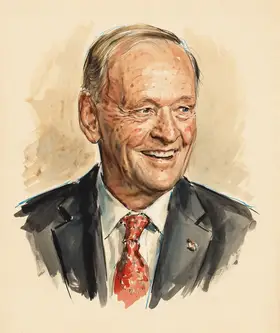
Jean Chrétien on Iraq War
TL;DR
Jean Chrétien definitively refused to join the 2003 US-led invasion of Iraq due to a lack of UN Security Council authorization.
Key Points
He announced in Parliament on March 17, 2003, that Canada would not join the US-led invasion without UN Security Council authorization.
Canadian intelligence assessments, distributed to him, often differed from those of allies and concluded there was no credible evidence of an active Iraqi WMD program.
Despite refusing to join the invasion, he ensured Canada maintained support for the war in Afghanistan, which freed up US forces for Iraq.
Summary
Jean Chrétien, as Prime Minister, took a strong and public stance against participating in the American-led invasion of Iraq in March 2003. His core position was explicitly tied to the absence of a United Nations Security Council resolution authorizing the military operation, which he maintained was a non-negotiable prerequisite for Canadian involvement. This stance was held despite pressure from allies, particularly the president of the United States and his British counterpart, and was reinforced by internal Canadian intelligence assessments that questioned the evidence of weapons of mass destruction. He announced his government's decision not to participate on the floor of the House of Commons, an act celebrated by many in his party and the broader public.
His decision was rooted in a long-standing Canadian foreign policy tradition of multilateralism and adherence to UN mandates, mirroring stances taken by previous prime ministers on other conflicts. While he maintained that Canada would not join the specific invasion, he did not sever ties entirely; Canada continued support for the war in Afghanistan and offered humanitarian aid for reconstruction in Iraq. Critics at the time feared repercussions for the Canada-US relationship and economic ties, but Chrétien asserted that their trade relationship was too interdependent to be severely damaged by a disagreement on principle. He remained resolute in his position, which is often viewed as a defining moment of his leadership.
Frequently Asked Questions
Jean Chrétien announced that Canada would not participate in the American-led invasion of Iraq that began in March 2003. This decision was made public after it became clear that the United States would not secure the necessary resolution from the UN Security Council. The Prime Minister stated this decision was based on his long-standing position that Canadian military action required UN authorization.
The former Prime Minister opposed the war primarily because the case for invasion lacked authorization from the UN Security Council. He also reportedly believed the war was unnecessary, as Iraq had been significantly weakened after the previous Gulf War and did not pose an imminent threat. Furthermore, he felt the conflict could be counterproductive to the broader war against terrorism.
Chrétien's decision caused strain in his relationship with the US President, who reportedly cancelled a planned visit to Ottawa following the announcement. The former Prime Minister acknowledged the difficulty but maintained that personal or diplomatic relations could not override Canada's principled stance on international law. Over time, both leaders moved past the disagreement, recognizing the rightness of each other's decisions from their respective viewpoints.
Sources6
Canada and the Iraq War | The Canadian Encyclopedia
Saying “No” to Bush on Iraq: A Defining Moment for Canada - Americas Quarterly
Antony Anderson: Jean Chrétien had an impossible choice to make on the Iraq War—and he got it right - The Hub
Canada and the Iraq War - Wikipedia
When Jean Chrétien said “Canada will not participate” in the invasion of Iraq, how did Canadians respond? : r/AskACanadian
Saying “No” to the United States: How Prime Minister Jean Chrétien Kept Canadian Soldiers out of the Iraq War – Canada and the Challenges of Leadership
* This is not an exhaustive list of sources.