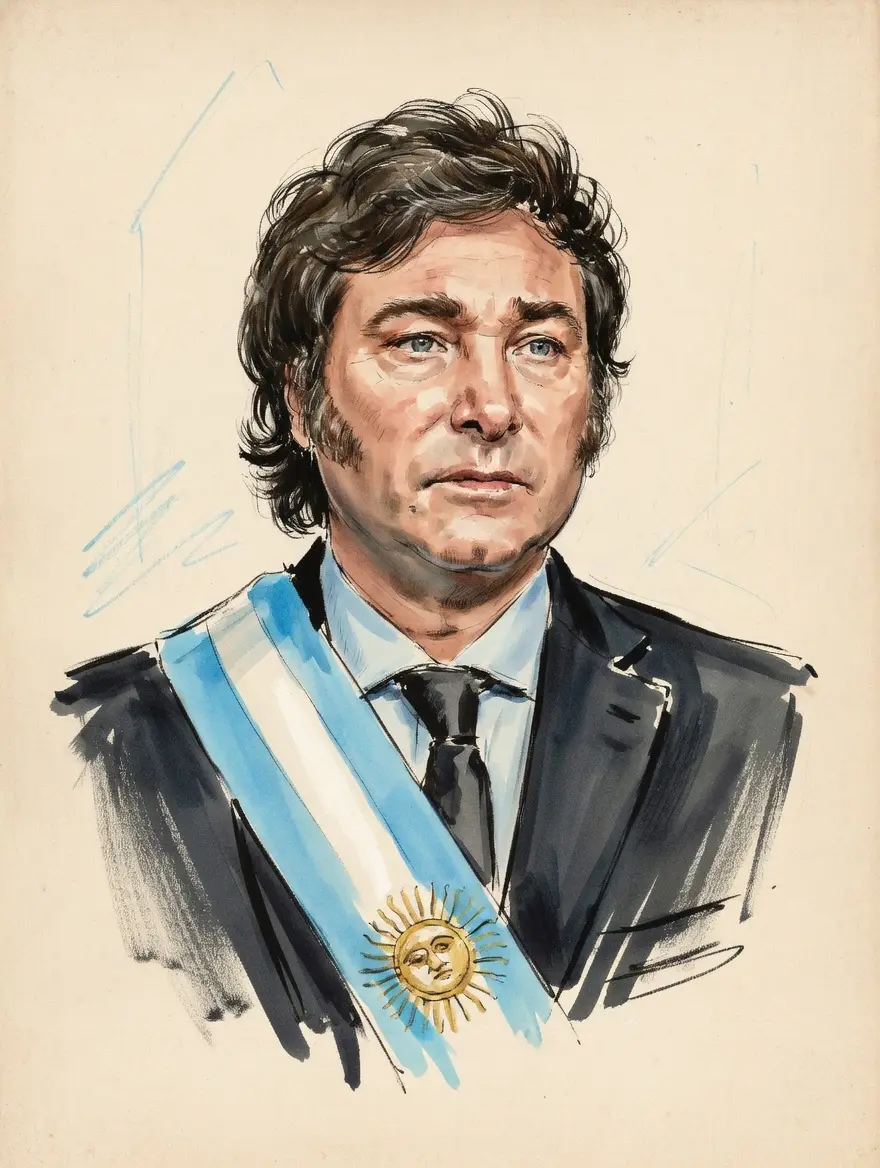
Javier Milei on China
TL;DR
Javier Milei maintains a strong ideological opposition to Chinese communism but pragmatically preserves crucial trade links due to economic necessity.
Key Points
The President has stated he is not going to break trade links with China, despite geopolitical alignment with the US in early 2026.
His administration reportedly moved to extend the currency swap agreement with Beijing, which provided access to an additional $5 billion in liquidity.
During his campaign, he made headlines by declaring he would not engage with “communist” regimes, which included China.
Summary
Javier Milei entered office with an intensely ideological stance, frequently using harsh rhetoric to condemn the Chinese Communist Party and aligning Argentina with the United States' geopolitical bloc. This initial positioning suggested a significant shift away from Beijing, which had previously secured major infrastructure deals and financial support, including a crucial currency swap agreement. His administration initially paused cooperation on certain strategic projects, such as inspections at a Chinese-operated space facility, reflecting this ideological posture and pressure from Washington for a counterbalance against Chinese influence.
However, economic reality has necessitated a softer, pragmatic approach, leading to a clear evolution in his policy. Despite the anti-communist rhetoric, the President has acknowledged the impossibility of severing commercial ties, explicitly stating he will not break trade links with China, which remains a primary trading partner. Furthermore, his administration moved to extend the vital bilateral currency swap, securing immediate financial liquidity necessary for the crisis-stricken economy, even in the face of reported opposition from the US Treasury. This balancing act reflects Argentina's deep dependence on Chinese trade, investment, and lending, forcing the President to manage ideological purity against pressing economic imperatives.
Key Quotes
We have always said that we are libertarians. If people want to do business with China, they can.”
“Trump is redesigning the world order, no longer thinking in terms of globalisation to pass onto geopolitical terms and part of that discussion is to end murderous socialism, whether it calls itself Venezuela, Cuba or Nicaragua,”
Frequently Asked Questions
Javier Milei holds a position that balances strong ideological opposition to the Chinese regime with pragmatic economic necessity. While he has used harsh rhetoric against communism, he acknowledges that Argentina cannot afford to break its significant trade and financial ties with Beijing. His stance reflects a necessary attempt to navigate both his anti-communist political base and his country's material reliance on Chinese commerce.
Yes, his position has visibly evolved since taking office. Initially, he adopted a highly confrontational, ideological stance against China during his campaign, suggesting a complete break. However, economic realities forced a practical reversal, leading him to preserve and even extend key financial agreements, like the currency swap, to maintain economic stability.
He has explicitly stated that he will not sever trade links with China, viewing the country as a great trade partner. This contrasts with his ideological desire to distance the country from 'communist' nations. He argues that commercial questions run parallel to his government's geopolitical alliances.
Sources6
Milei praises Trump but says he won't break trade links with China
Javier Milei: Between Trump's Bailout and China's Power
Argentina's Milei heads to the US again, balancing Trump ties with growing China trade
Milei's Softer Tone Shows How Much Argentina Needs China : r/geopolitics
Et tu, Milei? Is Argentina Getting Closer to China Again? | Wilson Center
When Ideology Meets Inflation, Argentina's Milei Turns to China
* This is not an exhaustive list of sources.