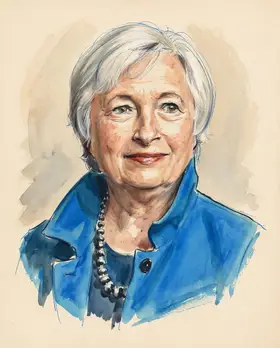
Janet Yellen on Inflation
TL;DR
Janet Yellen now views inflation as a persistent concern, regretting her earlier assessment that it was merely transitory.
Key Points
She admitted in late 2021 that it was time to retire the word "transitory" regarding inflation.
Geopolitical instability, specifically U.S.-Iran tensions, risks higher oil prices, which could delay Federal Reserve rate cuts due to renewed inflation pressure.
Yellen noted that high import tariffs can increase production costs and consumer prices in the domestic market, complicating inflation control.
Summary
Janet Yellen asserts that inflation remains a significant economic concern, particularly when new geopolitical or policy shocks emerge, such as rising oil prices driven by conflict between the United States and Iran. She has recently warned that such tensions could cause oil prices to spike, which in turn exacerbates inflationary pressures and compels the Federal Reserve to delay expected interest rate cuts. Yellen emphasizes that maintaining price stability, with inflation near the central bank's 2 percent target, is paramount, and she expressed concern over the risk of inflation expectations becoming self-reinforcing.
Her current cautious stance contrasts with her earlier remarks, leading Janet Yellen to state she regretted describing the inflation problem as "transitory" in 2021, acknowledging that the spread of new coronavirus variants and supply chain issues made it more durable. Furthermore, she has highlighted that certain policies, like high import tariffs previously implemented, can also contribute to higher production costs and consumer prices, complicating the fight against inflation.
Key Quotes
“I am ready to retire the word transitory,”
Frequently Asked Questions
Janet Yellen currently views inflation as a persistent threat to economic stability, emphasizing the need for price stability. She told reporters that ongoing geopolitical events, like Middle East tensions, can keep inflation high and force the Federal Reserve to delay monetary easing measures.
Yes, Janet Yellen acknowledged a change in her view, stating she regretted labeling inflation as "transitory" during 2021. She explained that subsequent factors, such as new virus variants, made the price increases more durable than initially expected.
In March 2026, Janet Yellen warned that escalating U.S.-Iran tensions could lead to sustained oil price spikes, which would put renewed pressure on inflation. This risk makes the Federal Reserve even more reluctant to implement interest rate cuts, according to her statements.
Sources4
Janet Yellen Warns of Inflation Concerns Amid Rising Oil Prices
Janet Yellen says it's time to stop calling inflation 'Transitory.'
Yellen warns Iran tensions could delay Fed rate cuts - Insurance News | InsuranceNewsNet
Janet Yellen warns of inflation risk, Fed rate cut in danger of being canceled?
* This is not an exhaustive list of sources.