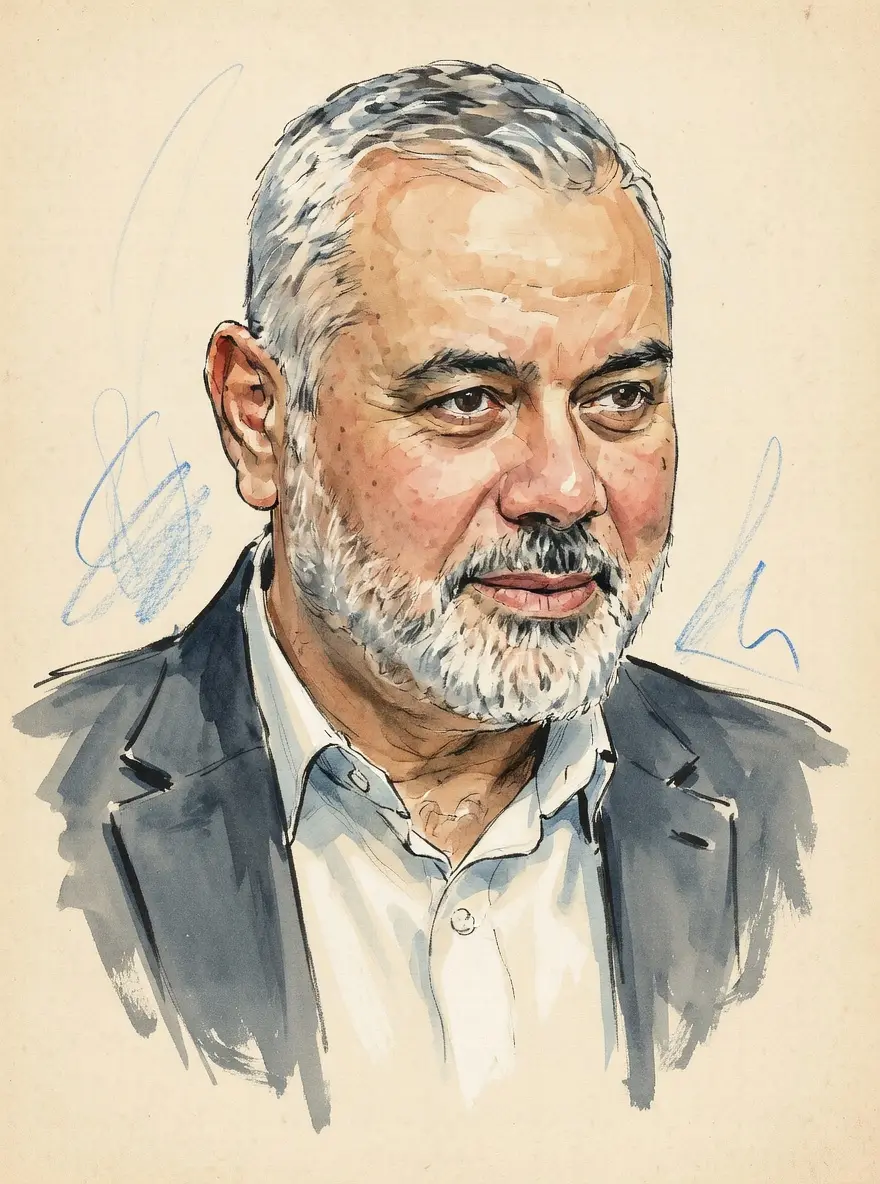
Ismail Haniyeh
- Known for
- Hamas leader, Prime Minister
- Born in
- al-Shati refugee camp, Gaza Strip
- Education
- bachelor's degree in Arabic literature, Islamic University of Gaza
Ismail Haniyeh was a pivotal Palestinian politician who served as the third chairman of the Hamas Political Bureau from 2017 until his assassination in 2024. Rising from activism during the First Intifada, he became the face of Hamas governance, serving as Prime Minister of the Palestinian National Authority following the 2006 legislative elections.
Signature Positions
Haniyeh's political career was defined by staunch resistance to Israel and leadership through significant political upheaval:
- Relations with Israel: Repeatedly stated Hamas would never recognize Israel, though he signaled willingness to accept a Palestinian state on pre-1967 borders if approved by referendum.
- Hamas Leadership: Elected Chairman of the Political Bureau in 2017, leading the organization during the October 7 attacks and subsequent war.
- Political Power: Clashed repeatedly with Mahmoud Abbas, refusing dismissal as Prime Minister in 2007 and maintaining control of the Gaza Strip.
- International Stance: Criticized Western aid as a tool for pressure and strongly condemned the normalization agreements between Israel and Arab states.
Notable Tensions
Haniyeh presented a complex leadership profile, balancing militant rhetoric with pragmatic diplomacy:
- Pragmatism vs. Resistance: While seen by some diplomats as a more pragmatic figure within Hamas, he was designated a specially designated global terrorist by the U.S. in 2018.
- War and Negotiation: He led Hamas during the Gaza war and the October 7 attacks, yet was simultaneously involved in cease-fire negotiations up until his death in Tehran.
- Family and Conflict: Despite his leadership role, several family members held Israeli citizenship, and others were treated in Israeli hospitals, creating personal complexities within the broader conflict.
Haniyeh led Hamas during its most internationally scrutinized period, culminating in the October 7 attacks and the ensuing war. His tenure saw Hamas update its charter to accept pre-1967 borders, a significant policy shift interpreted by some as a move toward moderation, while simultaneously directing the organization's military actions. His assassination in Tehran marks a major loss for Hamas’s political structure.