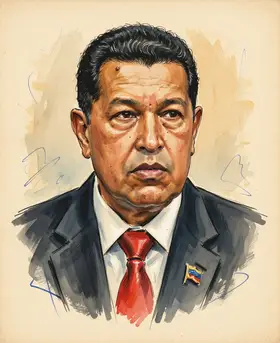
Hugo Chávez on Haiti
TL;DR
Hugo Chávez viewed Haiti as a historical ally whose sovereignty Venezuela must support through extensive financial and energy aid programs.
Key Points
He was one of the few regional leaders to condemn the US-backed coup against President Jean-Bertrand Aristide in 2004 and offered him asylum.
Venezuela provided substantial aid through Petrocaribe, which allowed Haiti to purchase oil on credit with long repayment terms and low interest rates.
In response to the 2010 earthquake, he canceled Haiti's entire debt to Venezuela, citing a historic debt owed by Venezuela to Haiti for past support.
Summary
Hugo Chávez positioned Venezuela as a staunch ally of Haiti, frequently contrasting his nation's support with the actions of the United States and the broader international community. This core stance was rooted in recognizing Haiti's historical role in liberating South America, specifically citing the aid provided by President Alexandre Pétion to Simón Bolívar. He actively opposed the 2004 coup against Jean-Bertrand Aristide, refusing to recognize the subsequent government and even offering the ousted president asylum. This approach was practically materialized through massive energy and financial aid, primarily via the Petrocaribe initiative, which provided subsidized fuel with preferential payment terms, a program Haitian leadership considered the most important aid.
Chávez's relationship with Haiti was characterized by solidarity and a clear challenge to perceived US hegemony in the region. During his 2007 visit, large crowds welcomed him enthusiastically, often chanting slogans against the sitting US President, while Chávez engaged directly with the people, unlike leaders perceived as aloof. Following the devastating 2010 earthquake, he cancelled Haiti's debt to Venezuela entirely, declaring a historic debt owed by Venezuela to Haiti. This framework of support provided revenue for Haitian government-controlled reconstruction projects, setting it apart from aid provided by Western powers and international bodies.
Key Quotes
“The President of Haiti is called Jean-Bertrand Aristide, and he was elected by the people.”
Frequently Asked Questions
Hugo Chávez held a strongly positive and supportive position regarding Haiti, framing the relationship as one of historical solidarity and debt repayment. He consistently offered substantial material aid, particularly through Petrocaribe, while criticizing the influence of the United States and other Western powers. According to reports, this support often included direct engagement with the Haitian people during his visits.
The primary mechanism for his support was the Petrocaribe agreement, which supplied Haiti with Venezuelan oil under preferential payment terms, allowing the government to finance social projects. Following the 2010 earthquake, Hugo Chávez declared that Venezuela owed Haiti a historic debt and subsequently cancelled all of Haiti’s oil debt to Venezuela. This aid often bypassed the centralized control of other international donors.
The leader was vocal in his criticism of the international community's role, especially the US involvement, which he often characterized as an occupation under the guise of aid or peacekeeping. Following the 2010 earthquake, he argued that the US should send doctors and medicine instead of armed soldiers, viewing the military presence as undermining Haitian sovereignty.
Sources6
Haiti–Venezuela relations - Wikipedia
Haiti - Diplomacy : Unveiling of the statue of Hugo Chavez - Institute of the Black World 21st Century
Chávez in Haiti, a Clear Alternative to the “International Community” – CEPR
Venezuelan president arrives in Haiti for official visit - Haiti | ReliefWeb
Hugo Chavez' legacy in Haiti and Latin America - Venezuelanalysis
While Western Powers Undermine Haitian Sovereignty, Venezuela Continues to Show Solidarity – Janata Weekly
* This is not an exhaustive list of sources.