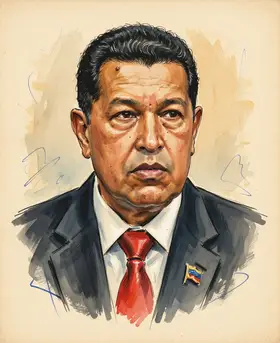
Hugo Chávez on American Imperialism
TL;DR
Hugo Chávez viewed American Imperialism as an aggressive, genocidal global force demanding resistance and socialist unity.
Key Points
He characterized American aggression as intensifying, particularly in the period following 2006, demanding a rise up against domination.
Chávez strongly opposed the expansion of US influence, viewing it as a primary driver behind global instability and national sovereignty threats.
He frequently called for the construction of a multipolar world order as a necessary defense against the singular imperialist power structure.
Summary
Hugo Chávez viewed American Imperialism as a profound and active threat, frequently characterizing the United States' foreign policy as inherently aggressive, domination-seeking, and genocidal in its global reach. He consistently framed his domestic and foreign policy initiatives, such as promoting regional integration blocs like ALBA, as direct counter-measures and resistance to this perceived hegemonic project. Key evidence of this stance included his condemnation of US military presence in the region, his opposition to US interventionism worldwide, and his vocal support for nations resisting American influence, often calling for revolutionary socialism as the necessary antidote to imperialist exploitation and domination.
This opposition formed a central pillar of his political identity and foreign relations strategy throughout his presidency, particularly after 2001. The perception of intensifying aggression and domination, especially following perceived threats to his own government, propelled him to advocate more forcefully for an anti-imperialist front among Latin American and other developing nations. Chávez's rhetoric stressed that the imperialist drive for control extended beyond military action to encompass economic subjugation and cultural imposition, requiring a unified, socialist response to secure national sovereignty and self-determination.
Key Quotes
The hegemonic pretension of the North American imperialism endangers the human race's survival.
The imperialists see extremists everywhere. It's not that we are extremists. It's that the world is waking up.
Frequently Asked Questions
Hugo Chávez vehemently opposed American Imperialism, consistently describing it as a genocidal and aggressive global force seeking domination, according to various political statements. He argued that this imperialism manifested through military, economic, and cultural means, necessitating strong regional resistance. He presented his Bolivarian Revolution as a direct challenge to this hegemonic power structure.
The core tenet of Hugo Chávez's opposition to American Imperialism remained consistent throughout his presidency, according to analysis of his public record. While the rhetoric and specific targets of his criticism might have evolved, the fundamental characterization of US foreign policy as imperialistic remained a central theme. This persistent view is evident across speeches from the early to late 2000s.
The main solution Hugo Chávez advocated for was the creation of a unified anti-imperialist front among Latin American and other developing nations, as stated in numerous addresses. He promoted regional integration projects, such as ALBA, as concrete steps toward building a multipolar world structure capable of resisting US hegemony. He saw socialist alternatives as the essential ideological defense against imperialist exploitation.
Sources8
World Sees Imperialism In American Reach, Strength
Hugo Chávez: Rise Up Against Imperialism
Hugo Chávez on the North American Empire: "They are genocidal and no one does anything to stop them"
Hugo Chávez predicted this.
The Bolivarian Revolution and its legacy: Hugo Chávez and the US Empire
Hugo Chávez: Rise up against US imperialism as aggression and domination intensifies
Hugo Chavez: The Path for Venezuela
Chavez: US Imperialism is 'Genocidal'
* This is not an exhaustive list of sources.