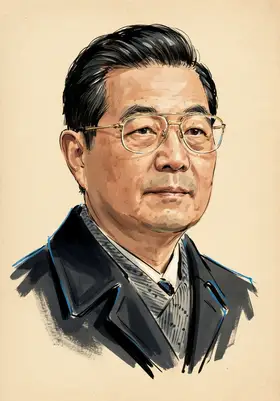
TL;DR
Hu Jintao staunchly upheld the CCP's unified, hard-line policy on Tibet, prioritizing stability and national unity above all else.
Key Points
In March 2009, he stressed the necessity to reinforce the "Great Wall of stability" to combat separatism and safeguard national unity in Tibet.
As Party Regional Committee secretary in Tibet (1988–1992), he oversaw the suppression of serious rioting in Lhasa on March 5, 1989.
He supported the central government's decision to abolish the theocratic regime and serfdom, marking the 50th anniversary of Tibet's "peaceful liberation" in 2001.
Summary
Hu Jintao's core position on Tibet was defined by an unwavering commitment to maintaining social stability and national unity, a stance that was reportedly inflexible even within the top leadership. During his tenure, he called for building a "Great Wall of stability" in Tibet ahead of sensitive anniversaries. His policy emphasized promoting development while vigorously combating separatism, implementing central government directives, and ensuring the building of a "socialistic new Tibet" that was unified and harmonious. This approach was informed by his own prior experience as the Party Regional Committee Secretary for the Tibet Autonomous Region from 1988 to 1992.
The implication of his firm position was a continuity of hard-line measures against dissent, which earned him the attention and backing of paramount leaders like Deng Xiaoping after suppressing 1989 unrest in Lhasa. Despite some external reports suggesting potential internal differences among elites regarding policy moderation or dialogue with the Dalai Lama, diplomatic dispatches indicated that Hu Jintao was perceived as being "completely" in charge and that challenging his Tibet line would be political suicide for any colleague. His predecessor's approach was also marked by an appeal to economic development as the fundamental condition for stability in the region.
Key Quotes
It is only under the leadership of the Communist Party of China, only in the embrace of the big family of the motherland and only by firmly taking the socialist road with Chinese characteristics that Tibet can enjoy today's prosperity and progress and an even better tomorrow.
Frequently Asked Questions
Hu Jintao's main policy centered on maintaining iron-willed stability and national unity in the Tibet Autonomous Region, according to his statements in March 2009. He urged authorities to combat separatism while simultaneously focusing on economic development for the local population. He viewed stability as the prerequisite for prosperity and progress.
According to diplomatic leaks published later, Hu Jintao was viewed as being firmly in charge of Tibet policy, with the entire top leadership unified behind the hard-line stance. Contacts suggested that challenging Hu on the 'extremely sensitive' Tibet issue would be virtually impossible for other leaders at the time.
Hu Jintao served as the Party Regional Committee Secretary of the Tibet Autonomous Region from 1988 to 1992, making him the top civilian official there during a restive period. His actions in suppressing unrest in Lhasa in 1989 reportedly earned him significant praise from Deng Xiaoping, aiding his later rise to power.
Sources7
President Hu Jintao calls for Great Wall of stability in Tibet
Hu Jintao's enduring Tibet connection
Hu Jintao
Full Text of Speech by Hu Jintao at Tibet's Peaceful Liberation (2001)
University of Minnesota Human Rights Library
New Chinese leadership and Tibet
WikiLeaks: Hu Jintao Inflexible Over Tibet Issue
* This is not an exhaustive list of sources.