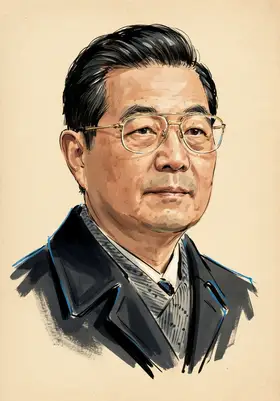
Hu Jintao on Presidential Legacy
TL;DR
Hu Jintao has not publicly articulated a specific position regarding his own presidential legacy.
Key Points
He reportedly remarked to Jiang Zemin in January 2003 that the North Korean nuclear issue 'binds us in common purpose'.
His policy towards Taiwan was adjusted to effectively deter independence while stressing 'no fear of delaying unification' (防獨漸統).
His administration's stance in the Six-Party Talks with North Korea was focused on dialogue and avoiding further escalation.
Summary
Hu Jintao has not publicly addressed the topic of his Presidential Legacy in detail, particularly in the provided sources which focus on US foreign policy during his tenure. The sources instead reference his policy decisions and diplomatic interactions with the US, such as his patient approach to North Korea and the adjustment of China's Taiwan policy from his predecessor's approach. In foreign policy discussions relating to his time, China's approach was described as being one of reassurance and a more patient strategy towards Taiwan, focusing on deterring independence while not immediately pushing for unification. His handling of the South China Sea disputes was perceived as giving a soft signal to Beijing's allies.
Information available suggests that Hu Jintao's leadership style and policy orientation, particularly in the context of the 'rise of China' and US engagement, were characterised by a patient, non-confrontational diplomatic stance. This was seen in his successor policy to Jiang Zemin's, which stressed 'effective deterrence' over immediate unification with Taiwan. The evidence points to a leader whose approach was pragmatic and focused on long-term stability, contrasting with the more aggressive posturing seen in later administrations.
Frequently Asked Questions
Hu Jintao has not publicly detailed a specific personal position on his Presidential Legacy in the available documentation. The sources instead focus on the policy stances he adopted during his time as paramount leader. His legacy is often described in terms of his policy adjustments towards Taiwan and his diplomatic approach to international security issues.
Hu Jintao engaged with the US administration on critical security issues, notably regarding North Korea's nuclear programme, where he sought to uphold the goal of a nuclear weapons-free peninsula. Despite this cooperation, the relationship was complex, with China being viewed by some in the US as a rising challenge to American hegemony, as noted in various external analyses from that time.
Hu Jintao's approach to Taiwan was characterized as more patient than his predecessor's, replacing a near-term push for unification with a strategy focused on deterring any formal declaration of independence (防獨漸統). This approach was noted by observers as less confrontational until provoked by Taiwan's political moves.
Sources6
Sino-centrism and the New Bush Administration*
Convergence and Divergence in Taiwan's US Policy, 2004-2008
US Election and the World – Part III | YaleGlobal Online
Up in the Air: A Study of Presidential Travel and its Uncertain Costs
A World of Constraints - Geopolitical Futures
China, the G20 and global economic governance | Lowy Institute
* This is not an exhaustive list of sources.