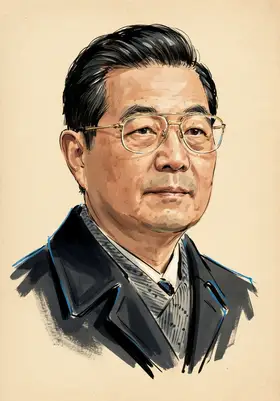
Hu Jintao on Political Faction
TL;DR
Hu Jintao strongly opposed internal political factionalism, viewing it as a fundamental threat to the Party's unity and governance.
Key Points
He consistently emphasized the need for Party unity against internal 'cliques' during his tenure as General Secretary (2002–2012).
His leadership promoted governance based on institutional norms rather than being dominated by specific factional interests.
The official ideology during his era stressed strict adherence to the Party line to prevent disruption from factionalism.
Summary
Hu Jintao maintained a consistently firm stance against the formation or influence of internal political factions within the Chinese Communist Party, seeing such groupings as detrimental to centralized authority and ideological coherence. Evidence of this position is rooted in the official doctrine promoted during his tenure, which emphasized strict adherence to the Party line and the necessity of unity under the central leadership. His administration repeatedly stressed the need to guard against 'cliques' and 'small circles,' framing them as disruptive elements that undermine the institutional stability established by his predecessors. This perspective was formally articulated in major speeches and Party documents throughout his time as General Secretary.
This ideological opposition to factionalism provided the political justification for consolidating power and managing relationships with competing patronage networks, such as the Communist Youth League faction with which he was associated. While he himself rose to prominence through one such network, his public political posture upon achieving paramount leadership focused on overcoming the perceived negative effects of such internal divisions on national policy implementation. The overarching implication of his consistent denunciation was to enforce disciplinary standards and maintain the Party's absolute control over the state apparatus, ensuring governance prioritized collective goals over personal or bloc interests.
Frequently Asked Questions
Hu Jintao held a strong negative position on political factionalism, viewing it as a fundamental threat to the unity and stability of the Chinese Communist Party. His stance, according to academic analysis, emphasized ideological discipline and institutional control over informal groupings. He frequently spoke about the dangers of internal cliques during his leadership period, according to official records.
Hu Jintao sought to manage factional politics primarily by publicly condemning the formation of 'cliques' and stressing the supremacy of the Party line. While he was associated with the Communist Youth League faction, his political posture upon reaching the top leadership focused on enforcement of central authority. This approach aimed to prevent any single bloc from undermining the collective decision-making process, as documented in Party doctrine.
Hu Jintao officially opposed internal Party factions, framing them as corrosive to the CCP's ability to govern effectively and maintain ideological purity. His administration's public messaging consistently warned against the formation of 'small circles' and unauthorized political groupings. This position was a core element of his political ideology throughout his decade as paramount leader.
Sources4
New Faces and Leaders, New Factional Dynamics in CCP Leadership Politics Following the 20th Party Congress
The Tuanpai Faction in China's Politics
From Jiang to Hu: China's Politics Under The Fourth Generation
The Rise of the Fourth Generation: China’s Leadership Transition
* This is not an exhaustive list of sources.