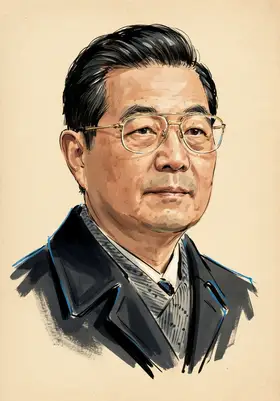
Hu Jintao on Kim Jong Il
TL;DR
Hu Jintao prioritized stable relations and denuclearization through direct engagement and diplomatic mediation with Kim Jong Il.
Key Points
He held talks with Kim Jong Il in Beijing in May 2011, during which they agreed to maintain peace and stability on the Korean Peninsula.
Hu Jintao sent a special envoy with a personal letter to Kim Jong Il in July 2003 to facilitate the reopening of the six-party talks on the nuclear issue.
When Kim Jong Il died in December 2011, Hu Jintao, as General Secretary, went to the DPRK Embassy to offer his sincere condolence.
Summary
Hu Jintao consistently viewed his relationship with Kim Jong Il through the strategic lens of maintaining regional stability and preventing the collapse of the North Korean regime, which China feared would lead to US encirclement of its borders. The core evidence of this position rests on his direct diplomatic outreach, most notably sending high-level envoys, including a special envoy carrying a personal letter, to persuade Kim Jong Il to return to multilateral disarmament negotiations. This proactive shuttle diplomacy was a deliberate price paid, despite China's potential financial burden, to repel US influence in Northeast Asia and secure peace on the Korean Peninsula.
This engagement was characterized by a strong emphasis on the bilateral relationship, with Hu Jintao frequently meeting Kim Jong Il during his unofficial visits to China to discuss economic cooperation and the nuclear issue. Hu stressed the importance of inheriting the traditional friendship while encouraging exchanges between the younger generations and supporting North Korea's focus on economic development. However, the underlying motivation for maintaining this friendly posture remained anchored in Chinese national security interests, as the complete collapse of the Kim regime or a major conflict was deemed detrimental to China's stability.
Frequently Asked Questions
Hu Jintao's primary goal when engaging with Kim Jong Il was to secure peace and stability on the Korean Peninsula, as detailed in official statements from 2010 and 2011. He viewed this stability as essential to counteracting the infiltration of US influence in Northeast Asia, a core strategic concern for China.
Hu Jintao maintained a consistent, pragmatic policy toward Kim Jong Il throughout his leadership, focusing on dialogue to resolve the nuclear issue, according to a 2004 report. His actions showed a clear commitment to bilateral relations and advancing the six-party talks process regardless of regime politics.
While offering condolences in December 2011, Hu Jintao called Comrade Kim Jong Il a 'close friend of the Chinese people' who made important contributions to bilateral friendship, according to the embassy report. He also expressed belief that the Korean people would turn grief into strength under the new leadership.
Sources5
Hu Jintao Holds Talks with Kim Jong Il
DPRK Briefing Book: Hu Jintao writes to Kim Jong-il to open door to six-party talks
Hu Jintao and Other Chinese Leaders Offer Their Condolence on the Death of Kim Jong II at the DPRK Embassy in China
Hu Jintao, Kim Jong-il Hold Talks
* This is not an exhaustive list of sources.