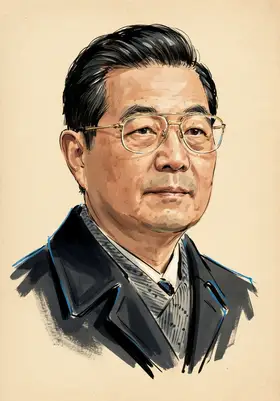
Hu Jintao on Jiang Zemin
TL;DR
Hu Jintao completed an orderly, planned succession from Jiang Zemin, carefully consolidating control over state and military posts.
Key Points
The transfer of the top military post from Jiang Zemin to Hu Jintao was finalized at the Fourth Plenum of the 16th Central Committee in September 2004.
Hu’s early term saw him constrained by the ongoing influence of Jiang’s Shanghai faction, which reportedly controlled many high-ranking positions.
Hu later won praise for voluntarily retiring from all positions, signaling that elders should adhere to protocol and avoid meddling in their successors' affairs.
Summary
Hu Jintao’s relationship with his predecessor, Jiang Zemin, was defined by the structured, ten-year process of leadership transition that culminated in Hu assuming the top three posts: General Secretary, President, and Chairman of the Central Military Commission (CMC). This transition, completed in September 2004 with the transfer of the CMC chairmanship, was hailed as an orderly, planned succession, setting a precedent in major communist countries. Hu publicly saluted Jiang’s leadership at the transfer meeting, and Jiang endorsed Hu’s qualifications to command the military, suggesting a degree of negotiated compliance during the handover period, despite reports of factional struggle beforehand.
The political dynamic during Hu’s early tenure involved navigating the influence of the former leader, as Jiang retained informal power through his Shanghai faction, which constrained Hu’s ability to enact radical change. Hu carefully managed this by elevating Jiang’s historical standing through publications, while simultaneously moving to consolidate his own authority, such as by removing Jiang’s protégé from a key military post. This suggests Hu’s position was one of patiently outmaneuvering factional resistance to fully institutionalize his leadership over the party, state, and military apparatus.
Frequently Asked Questions
Hu Jintao succeeded Jiang Zemin as Chairman of the Central Military Commission (CMC) in September 2004, completing the planned leadership succession begun two years earlier. This transfer was approved by the Fourth Plenum of the 16th Central Committee, solidifying Hu’s control over the party, state, and military. Jiang endorsed Hu at the expanded CMC meeting held after the plenum, according to reports.
The political relationship was characterized by a careful, staged transfer of power where Hu Jintao sought to consolidate authority while managing the lingering influence of Jiang Zemin and his faction. Observers noted that Hu was constrained by factional opposition during his tenure, suggesting a complex balance rather than outright opposition between the two leaders. Hu navigated this by ensuring Jiang's historical standing was acknowledged while securing key institutional positions for his own allies.
Hu's voluntary retirement from all posts, including the military commission, was seen as a message to elders like Jiang Zemin that they should retire according to protocol and refrain from interfering with successors. However, speculation existed regarding Hu's absence from Jiang Zemin's funeral committee ranking, suggesting lingering complexities or political signals regarding the factions. The ultimate resolution of the Shanghai faction's influence is debated in analyses of the period.
Sources6
Hu Jintao
With Hu in Charge, Jiang's at Ease
Historic Power Struggle Between Jiang Zemin and Hu Jintao: Shanghai Faction Battle Unfolds
China's Central Military Commission Under Hu Jintao
Serious Question: What do you guys think of Jiang Zemin and Hu ...
Why former Chinese leader Hu Jintao was highest profile absentee from Jiang Zemin’s funeral
* This is not an exhaustive list of sources.