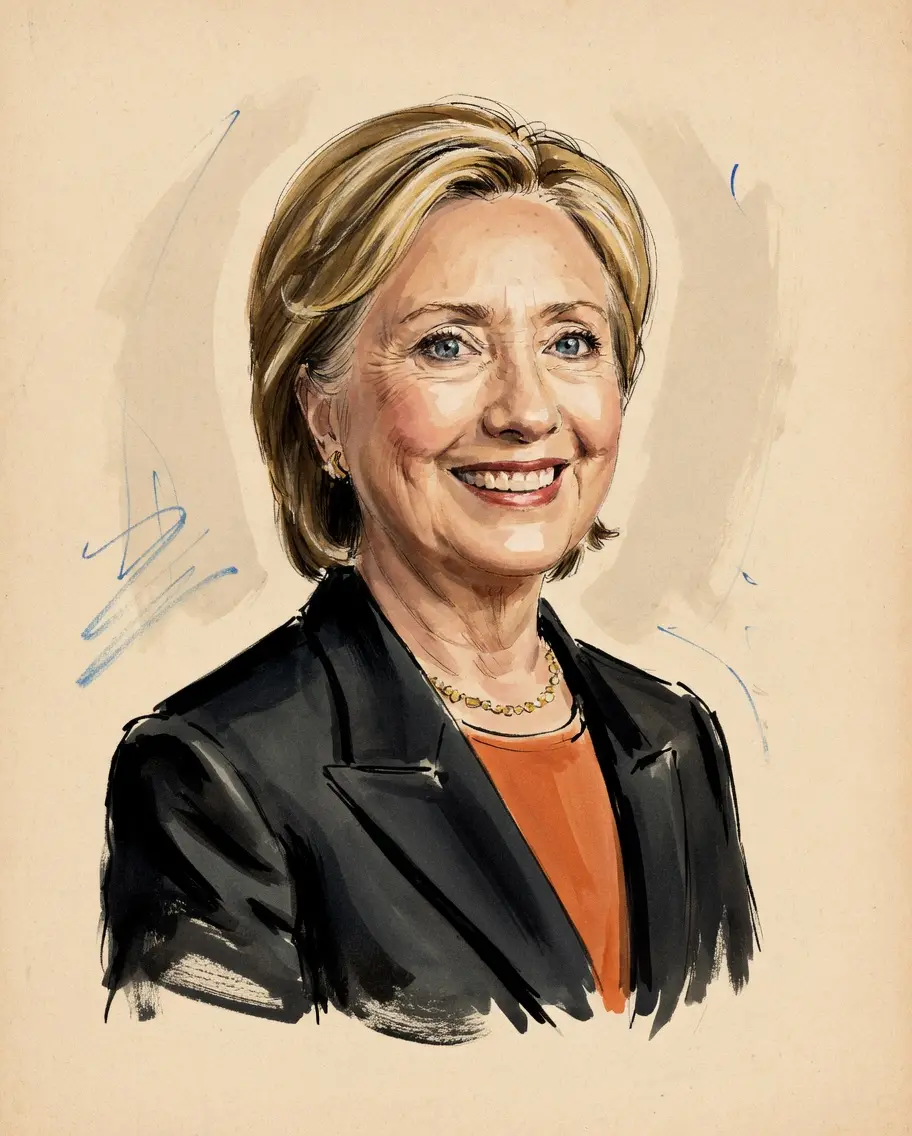
Hillary Clinton on Christianity
TL;DR
Hillary Clinton largely frames her views through a lens of social justice, often contrasting her faith-informed principles with political opponents' rhetoric.
Key Points
She identified her Methodist faith as a significant influence on her moral compass and drive for public service.
She accused political opponents of waging a "war on empathy" which she links to an undermining of genuine Christian values.
During a 2016 campaign stop in Iowa, she discussed her connection to her Christian faith and its role in her life.
Summary
Hillary Clinton has frequently discussed her personal faith, often tracing her commitment to public service and social justice back to her Christian upbringing and beliefs. She has spoken about her Methodist faith, noting its influence on her moral compass and her work advocating for vulnerable populations. Her public statements often connect Christian tenets, such as compassion and serving the poor, to her policy positions and political motivations.
More recently, her commentary has focused on the political use of Christianity by certain factions, particularly accusing opponents of waging a "war on empathy" that undermines core Christian values. She has framed this as a divergence from what she views as authentic, compassionate Christian teaching, particularly in relation to specific political figures and movements. While affirming the importance of faith, her current public discourse often contrasts her own spiritual foundation with what she sees as the politicization and weaponization of religious language by others.
Frequently Asked Questions
Hillary Clinton maintains a personal connection to her Christian faith, specifically as a Methodist, which she cites as foundational to her commitment to social justice. Her public position often involves affirming the positive influence of faith while criticizing the political manipulation of Christian rhetoric by opponents.
There is no widespread evidence suggesting a fundamental change in her personal religious adherence or its influence on her moral framework. However, her public commentary has evolved to sharply critique the politicization of Christianity by specific contemporary political movements.
Hillary Clinton has stated that genuine Christian values, such as empathy and caring for the vulnerable, should guide public service. She has contrasted this view with political opponents whose rhetoric, in her assessment, actively works against these core tenets.
Sources6
The War on Empathy
Hillary Clinton accuses Trump’s MAGA of war on Christian values
Hillary Clinton on Faith and Christianity in Iowa
This is a remarkable piece by Hillary Clinton on Trump, Christianity and the importance of empathy
Hillary Clinton Christianity Quote
* This is not an exhaustive list of sources.