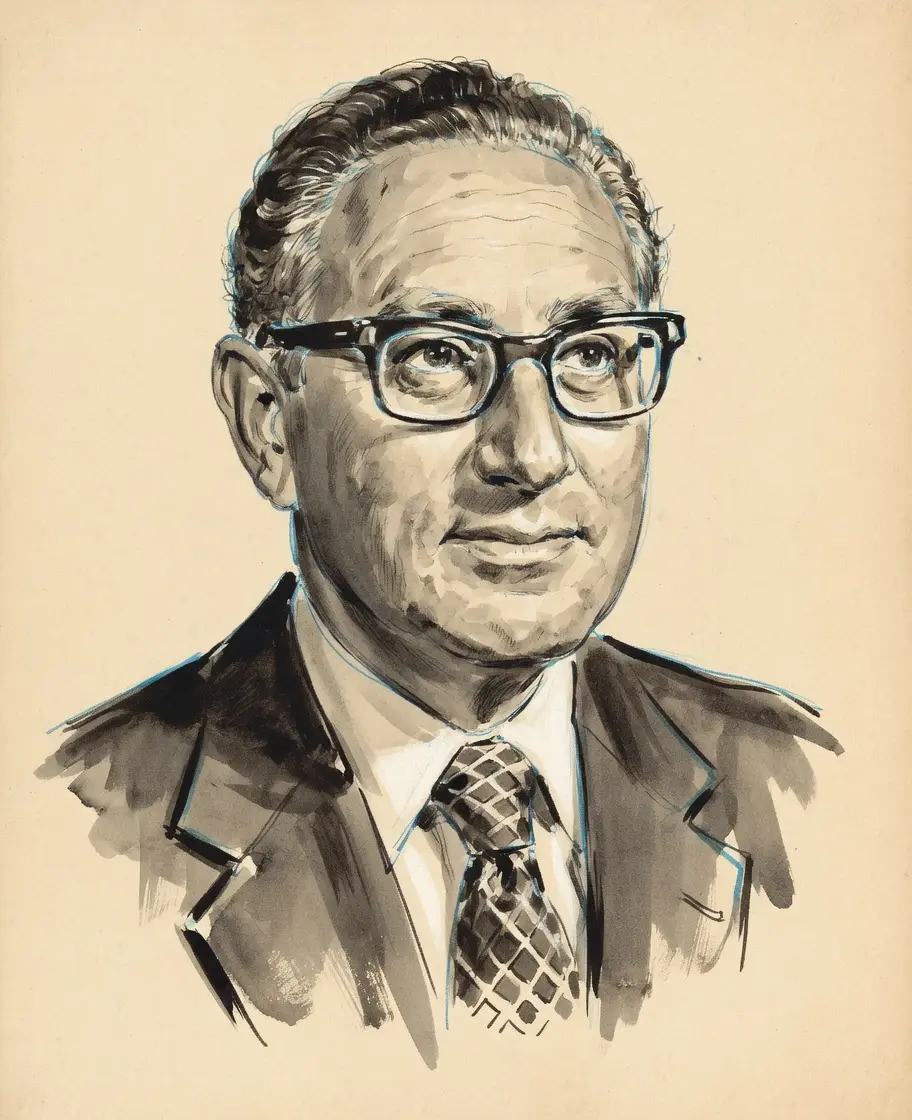
Henry Kissinger on Richard Nixon
TL;DR
Henry Kissinger viewed Richard Nixon as a tragic figure whose foreign policy vision he enabled through a highly influential partnership.
Key Points
Kissinger played a crucial role in shaping the “Vietnamization” strategy beginning in 1969, though he privately doubted its optimistic projections.
The two men were compared to a partnership like Wilson and House, with Kissinger consolidating foreign policy power in the White House, often bypassing the State Department.
On April 28, 1973, Kissinger called the president to console him after the firing of senior aides, reassuring him that their “achievements” would outweigh the current scandal.
Summary
Henry Kissinger’s position on Richard Nixon was defined by a uniquely powerful and symbiotic professional relationship that persisted even through the president's downfall. Kissinger, who had previously expressed deep reservations about Nixon’s candidacy, became his indispensable partner in shaping foreign policy as National Security Advisor and later as Secretary of State. Their shared commitment to Realpolitik, a focus on power and pragmatic interests over moral considerations, drove achievements like the opening to China and the pursuit of détente with the Soviet Union.
Despite their shared success, the relationship was personally complex, marked by mutual reliance alongside underlying resentment; Kissinger privately called the president a “drunken lunatic” while publicly flattering him, and he assumed an almost co-presidential role during the Watergate turmoil as Nixon’s political fortunes waned. Upon Nixon's resignation, Kissinger consoled the departing president, whom he considered a “tragic figure,” while simultaneously protecting his own position and ensuring his legacy, which he believed history would treat more kindly than his contemporaries.
Key Quotes
History,” Henry Kissinger told Richard Nixon on the eve of the president’s resignation in August 1974, “will treat you more kindly than your contemporaries have.”
“We’ve got to find some formula that holds the thing together [for] a year or two, after which — after a year, Mr. President, Vietnam will be a backwater. If we settle it, say, this October, by January ‘74 no one will give a damn.”
“I didn't have, really have anything. I just wanted to call you to tell you I was thinking of-”
Frequently Asked Questions
Henry Kissinger's overall sentiment toward Richard Nixon was mixed. He admired Nixon's vision and courage in foreign policy, which led to major achievements, yet he also privately expressed concern about the president's character, referring to him as a "tragic figure" upon his resignation. Kissinger's support was ultimately professional and results-oriented rather than purely personal.
In the waning hours before Nixon’s departure in August 1974, Kissinger engaged in a highly unusual and emotional moment, joining the president in prayer on the floor of a White House bedroom. Kissinger reassured the distressed president that history would judge his achievements more kindly than his contemporaries did. This moment underscores the deep, if sometimes fraught, bond between the two men.
The relationship between the president and his advisor was unusually close and powerful, enabling them to centralize foreign policy decision-making. They shared a commitment to pragmatism and making history, but also suffered from personal tensions; Kissinger fawned over Nixon in person while disparaging him privately. This duality defined their tenure in power.
Sources8
Analysis: Henry Kissinger to Nixon
Kissinger consoles Nixon | The President Calling: Kissinger consoles Nixon
On paper, Henry Kissinger was everything that Richard Nixon seemingly despised. Yet, Nixon chose Kissinger to work with directly to help achieve Nixon's foreign policy goals. How did this happen? : r/AskHistorians
Review: "Nixon and Kissinger" | Columbia Magazine
Nixon, Kissinger, and the 'Decent Interval' | Miller Center
Kissinger's Very Mixed Legacy of Brilliance and Brutality • Stimson Center
Henry Kissinger - Wikipedia
Henry Kissinger was a trusted confidant to President Nixon until the bitter end | AP News
* This is not an exhaustive list of sources.