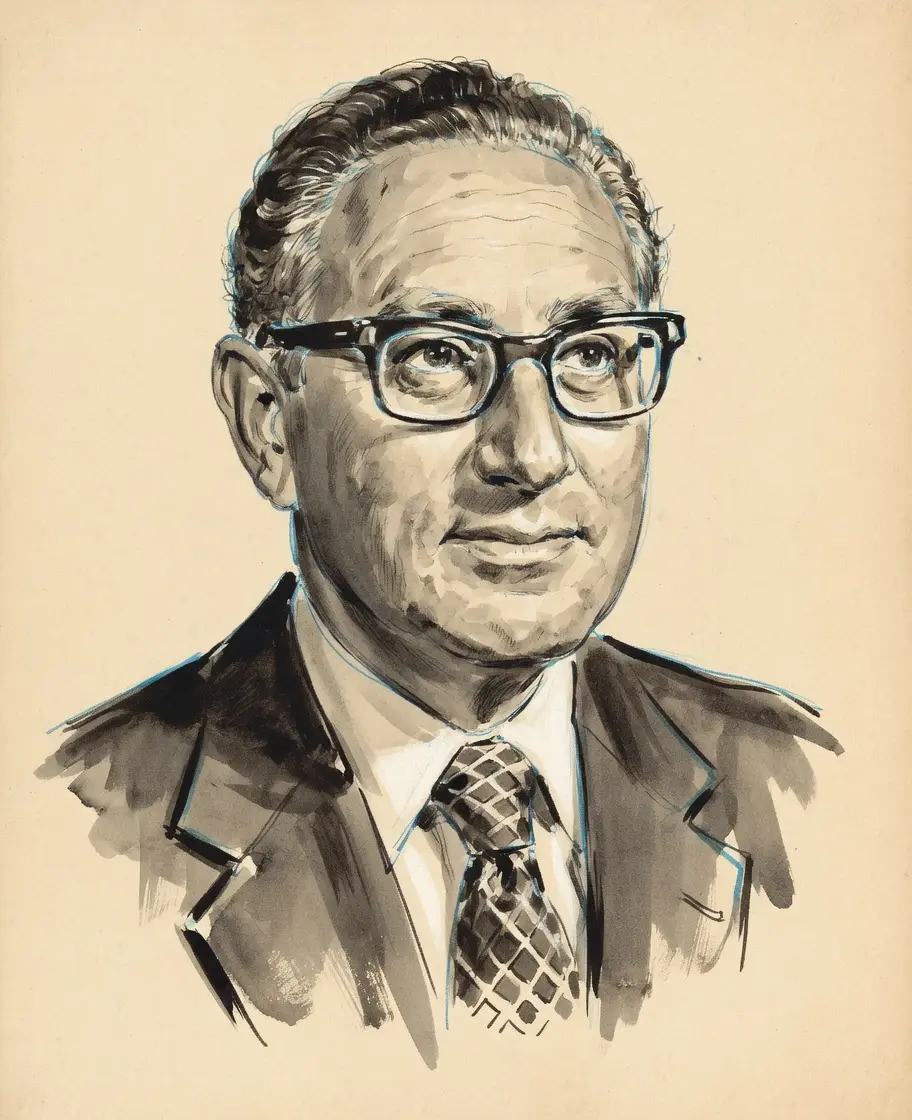
Henry Kissinger on Middle East
Key Points
He saw the security of Israel as a moral imperative for all free peoples.
His shuttle diplomacy after the 1973 war aimed to create a U.S.-led order by isolating the Palestinian movement.
He staunchly supported the Shah of Iran as a key pillar of stability in the Persian Gulf until the Shah's overthrow in 1979.
Summary
Henry Kissinger's core approach to the Middle East was characterized by pragmatic diplomacy aimed at establishing a stable regional order in which the United States would remain indispensable. This stance was heavily influenced by the Cold War context, where preventing Soviet influence was paramount. Evidence of this is seen in his shuttle diplomacy following the 1973 war, which successfully brokered disengagement agreements between Israel and its neighbors, notably paving the way for the eventual Israel-Egypt peace treaty. Concurrently, his policy sought to enhance Israel's strategic capacity while isolating the Palestinian movement, framing Israeli security as a moral imperative for free peoples.
His strategy involved balancing relationships, such as bolstering the Shah of Iran as a pillar of regional stability against radical elements and Soviet influence, despite reports of the Shah's severe internal repression. However, this approach is also seen as having created long-term challenges, particularly by neglecting internal political reform in Iran, which culminated in the 1979 Revolution. Later in his career, he continued to express strong views, such as vehemently opposing the 2015 nuclear deal with the Islamic Republic of Iran.
Key Quotes
The Council was a seminal shaping experience in my life. It introduced me to a world that seemed totally remote to me. Had I not wound up with the study group at the Council, I would have been a historian.
Frequently Asked Questions
Henry Kissinger's main goal in the Middle East was to stabilize the regional order to best serve U.S. interests, particularly within the context of Cold War competition. This involved managing the Arab-Israeli conflict through incremental steps rather than seeking a single, comprehensive peace.
Henry Kissinger is highly remembered for initiating the diplomatic process that led to the eventual Camp David Accords, which secured Egypt’s recognition of Israel. This move was strategically vital for shifting Egypt away from the Soviet sphere of influence.
Kissinger’s policy was consistently aimed at excluding the Soviet Union from major diplomatic arrangements in the region, thereby increasing American influence. He sought to achieve this by aligning key regional actors like Egypt and Israel with the United States.