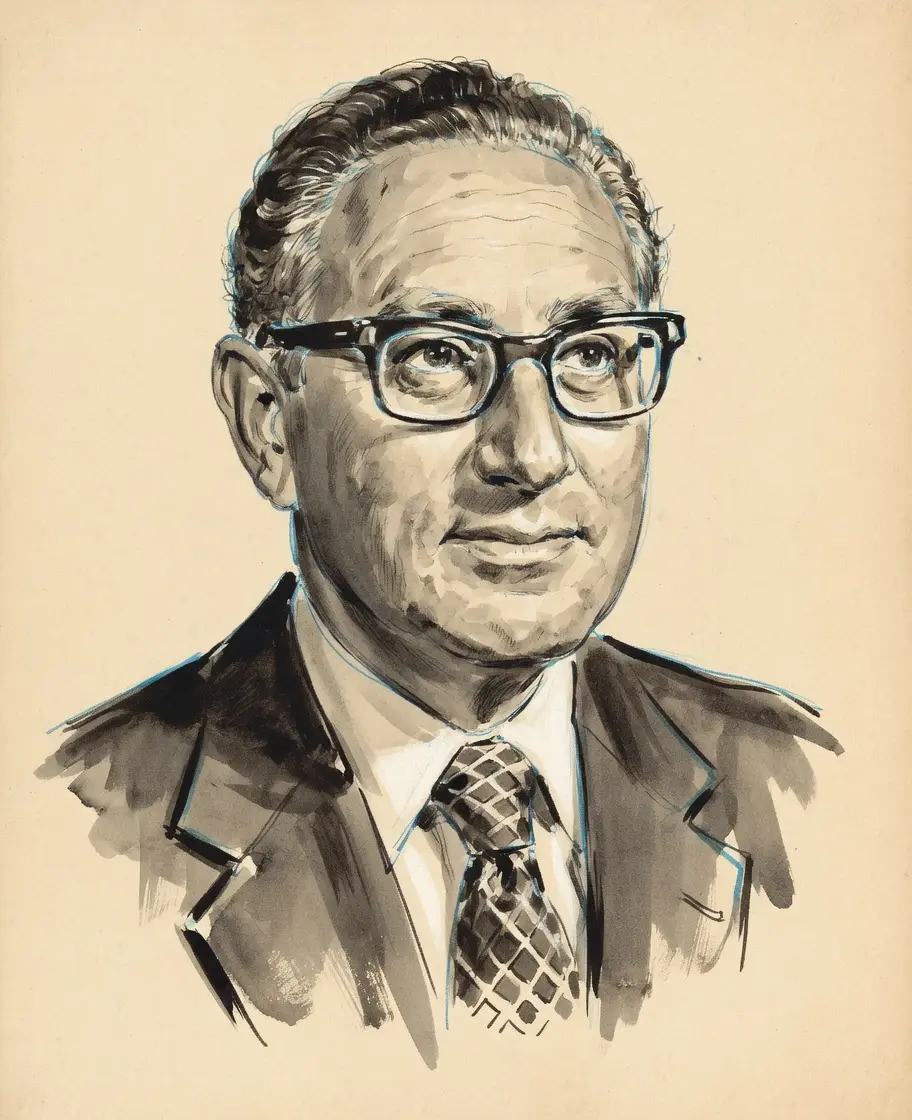
Henry Kissinger on Israel
TL;DR
Henry Kissinger viewed Israel's survival as vital, but prioritized broader US geopolitical and oil interests through phased diplomacy.
Key Points
He believed in frustrating the Arab-Soviet relationship to facilitate peace negotiations following the 1973 war.
In a 1975 meeting with Jewish leaders, he stated American interests include the survival of Israel but also involve 130 million Arabs near world oil supplies.
In 1969, he warned President Nixon that an Israeli nuclear program was not in the US national security interest, suggesting a policy of ambiguity.
Summary
Henry Kissinger's position on Israel was rooted in his Realpolitik doctrine, emphasizing US geopolitical and economic interests in the Middle East, which often created tension with Israeli security demands. His core strategy post-1973 was to frustrate Arab dependence on the Soviet Union by using US influence to broker step-by-step disengagement agreements between Israel and its neighbors, a process he felt was crucial to regional stability and oil supply security. He believed Israel's strength was necessary for its survival but argued that Israeli strength alone did not serve broader US global interests against the spread of communism in the Arab world, necessitating compromise from Jerusalem.
His stance evolved, particularly after the 1973 Yom Kippur War, which shattered his prior assumptions about Israeli military invincibility and his approach to peace. Following a breakdown in 1975 negotiations, he threatened an unprecedented policy reassessment, demonstrating a willingness to apply significant pressure on the Israeli government, viewing their refusal to yield on certain territorial points as a "deliberate provocation against the United States" and a threat to his diplomatic achievements. In private discussions with Arab leaders, he suggested the US might accept reducing Israel's size to "historical proportions," indicating that while survival was guaranteed, territorial gains were negotiable based on US leverage.
Frequently Asked Questions
Henry Kissinger favored a "step-by-step" approach to the Arab-Israeli conflict rather than an immediate overall settlement. This method focused on securing initial disengagement agreements between Israel and its neighbors to build confidence and manage the conflict incrementally. He felt this approach was superior because comprehensive talks would unite all Arabs against Israel, giving the Soviets an advantage.
Yes, the 1973 War caused a significant shift, leading to profound frustration when the anticipated swift Israeli victory did not materialize. Following this, he became much more willing to pressure Israel, even threatening a policy reassessment in 1975 when negotiations stalled. This reflected his new focus on leveraging Israel's military dependence to enforce political compromises aligned with US regional strategy.
Kissinger maintained that the United States had an abiding interest in Israel's security and survival, but that this interest was only one component of its broader Middle East strategy. He argued that Israel's existence was of "sentimental importance" but that a strong Israel did not inherently prevent the spread of communism in the Arab world. His main goal was leveraging US influence over Israel to secure regional stability for US economic interests.
Sources9
Henry Kissinger: What I got wrong about Ukraine, China and his legacy
Kissinger's wrath: the reassessment of the US-Israel relationship (March 1975)
Henry Kissinger's Jewish and Israel ties: A complex identity
Kissinger Memorandum: "To Isolate the Palestinians"
Kissinger: Realist who refused to take up Palestinian issue dies at 100
Israeli Nuclear Program: Memo to President Nixon from Henry Kissinger, 7/16/69
Kissinger Suggests Smaller Israel in Meeting With Iraqi Official
Henry Kissinger, Architect of U.S. Foreign Policy, Dies at 100
Memorandum of Conversation, Damascus, May 27, 1974, 12:15–2:22 a.m.
* This is not an exhaustive list of sources.