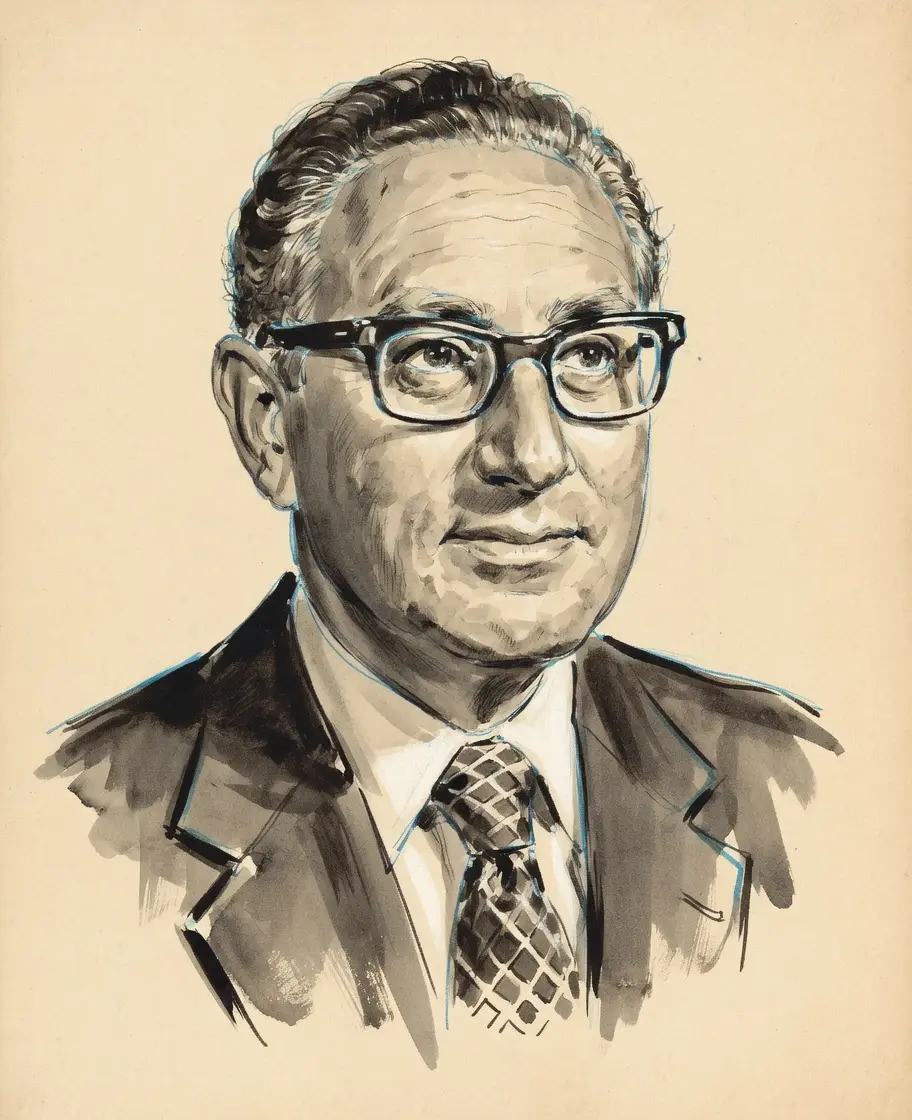
Henry Kissinger on India
TL;DR
Henry Kissinger's view of India evolved from Cold War antagonism to recognizing its future strategic indispensability to the world order.
Key Points
During the 1971 South Asia crisis, he viewed India as a "Soviet stooge" and actively worked to support Pakistan.
He reportedly described Prime Minister Indira Gandhi as a "bitch" and expressed contempt for the Indian people privately in 1971.
In his later career, he advocated for strong U.S.-India ties, calling India an ally and an indispensable element of the 21st-century order.
Summary
Henry Kissinger's position on India was initially defined by Cold War geopolitical calculations where he viewed the nation as a Soviet client state, leading to strong antagonism and actions like supporting Pakistan during the 1971 crisis. This era was marked by documented derogatory private remarks about Indian leaders and policies, stemming from a prioritization of containing communism and securing the China opening. For instance, during the 1971 war, he downplayed reports of atrocities and actively sought to preserve West Pakistan against Indian actions, which soured U.S.-India relations significantly.
However, after the Cold War, his stance experienced a notable transformation toward a pragmatic acceptance and even advocacy for strong ties. He later acknowledged India's strength, notably after its 1974 nuclear test, where he resisted strong punitive measures. In his later years, Kissinger described India as an indispensable element and a pivot of the twenty-first-century order, praising its leadership and suggesting parallel objectives with the United States.
Key Quotes
India has parallel objectives to the United States
Frequently Asked Questions
Henry Kissinger initially held a highly negative view of India during the Cold War, primarily viewing it as aligned with the Soviet Union. This perspective led to policies, such as the 'tilt' toward Pakistan in 1971, that were detrimental to U.S.-India relations. He expressed this antagonism through privately documented derogatory comments toward Indian leadership.
Yes, Henry Kissinger's position on India significantly changed over time, particularly after the Cold War ended. While his early actions were widely criticized in India, he later acknowledged the country's growing importance. He evolved to call India an ally and a crucial component of the future global order.
When India conducted a nuclear test in 1974, Henry Kissinger favored a restrained, pragmatic approach rather than strong condemnation or punitive actions from the United States. He seemed to accept the reality of India as a nuclear power, even though non-proliferationists ultimately prevailed in setting the official U.S. policy.
Sources6
Foreign Relations of the United States, 1969-1976, Volume XI, South Asia Crisis, 1971 Document 274
Diplomacy Despite It All – Kissinger's India Fix
On India, Kissinger changed his mind
How Henry Kissinger went from 'Indians are b******s' to 'Indians are great'
Henry Kissinger - Wikipedia
“Egregious stupidity”: The story of when Australia split with Kissinger over South Asia
* This is not an exhaustive list of sources.