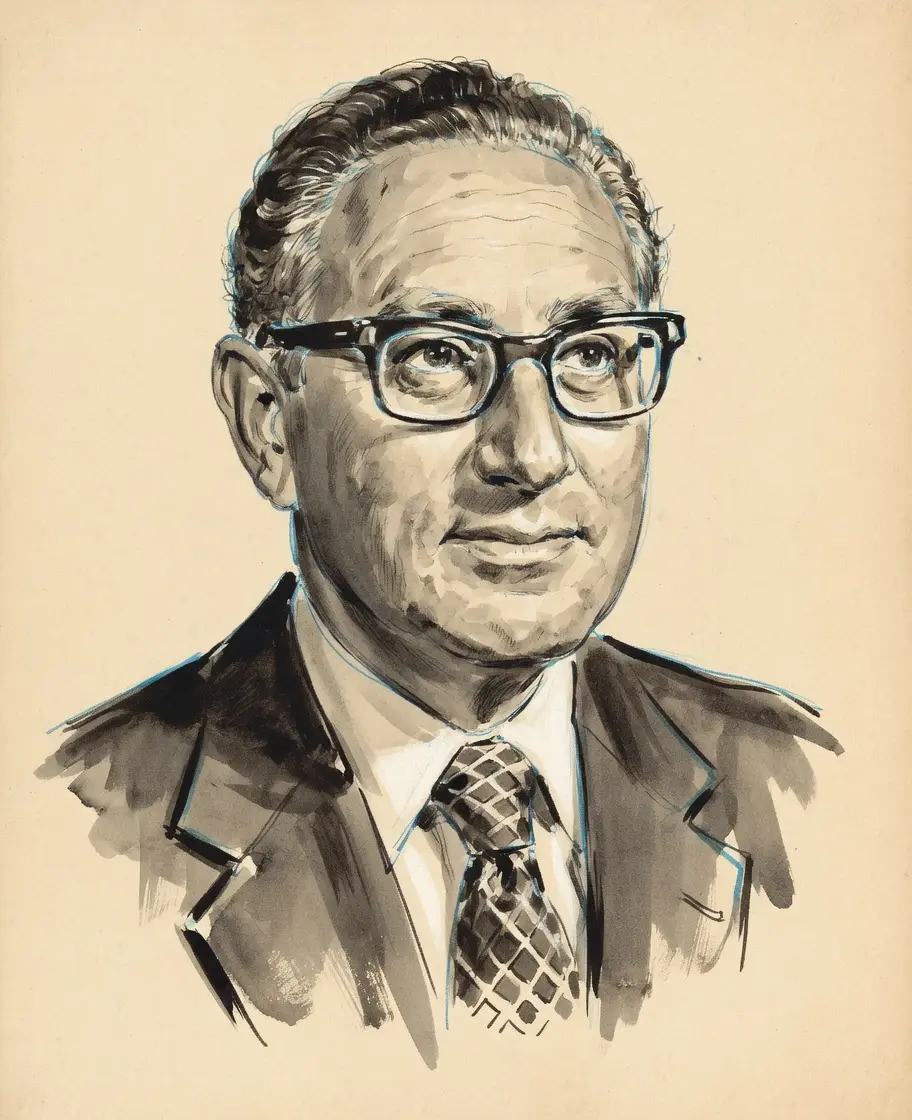
Henry Kissinger on Ethiopia
TL;DR
Henry Kissinger viewed Ethiopia primarily through a Cold War strategic lens, prioritizing US interests like Middle East stability over the alliance.
Key Points
He advised being as responsive as possible to Ethiopian requests for assistance in April 1974, following the initial stages of the revolution.
His staff discussed the internal situation and the US military assistance program in preparation for his briefing in September 1974.
In a staff meeting in October 1974, the Secretary of State discussed how to respond to Ethiopia's arms request amid the escalating revolution.
Summary
Henry Kissinger's position on Ethiopia, particularly during his time as National Security Advisor and Secretary of State in the 1970s, was dictated by realpolitik and the overarching Cold War strategy of disengagement from peripheral areas unless vital US interests were directly threatened. His administration assessed Ethiopia as a crucial Cold War ally due to the strategic Kagnew military communications base and its position on the Red Sea, but this strategic value was being deliberately downgraded as satellite technology advanced and priorities shifted to Middle East conflict resolution. The policy was characterized by a calculated management of the alliance, marked by a refusal to fully meet the Emperor's requests for military modernization, as seen in discussions from 1974 regarding arms supplies.
This approach led to a strategic abandonment, which informed the US response to the 1974 revolution and the subsequent rise of the more radical, pro-Soviet Derg regime. Critically, Kissinger's team reportedly considered that the conflict with Eritrean separatists might result in Eritrean independence, showing a willingness to accept Ethiopia's territorial dismemberment if it served broader strategic goals. Furthermore, historical analysis suggests a recommendation from Kissinger in 1972 to exploit ethnic and religious divisions to keep Ethiopia in perpetual internal conflict, a strategy viewed as being implemented in subsequent years to manage the nation's trajectory.
Frequently Asked Questions
Henry Kissinger's primary focus on Ethiopia was rooted in Cold War geopolitics and maintaining US leverage, particularly concerning the strategic Kagnew Station and the wider Red Sea basin. He was less concerned with long-term partnership than with using the alliance to balance Soviet influence and support broader Middle East diplomacy. This perspective led to a managed decline of the alliance as US strategic needs evolved.
Yes, archival records suggest that during discussions in 1975 concerning the Eritrean conflict, Henry Kissinger explicitly speculated that the war would end with Eritrean independence. This prediction indicates a pragmatic, rather than purely loyal, view of Ethiopia's territorial integrity within his strategic calculus. His acceptance of this outcome was based on what he perceived as the necessary outcome for US interests.
It is claimed in some analyses that Henry Kissinger, as early as 1972, recommended that US policy should be to keep Ethiopia in perennial internal conflict. This alleged strategy involved exploiting existing vulnerabilities such as ethnic and religious divisions to destabilize the country. This approach is contrasted with an earlier focus on maintaining the unity of the Haile Selassie regime.
Sources7
Foreign Relations of the United States, 1969–1976, Volume E–6, Documents on Africa, 1973–1976 Horn of Africa
The Strategic Abandonment and Enduring Shadow of Henry Kissinger in Ethiopia – HORN REVIEW
U.S. Foreign Policy Toward Ethiopia and Somalia 1974-1980
Paper On Kissinger and Lord Macaulay's Proposals - ES
Henry Kissinger and the American Century
Henry Kissinger on Eritrea-Ethiopia February 1975
Ethiopia: Violations of the Human Rights of Refugees and Resettled People
* This is not an exhaustive list of sources.