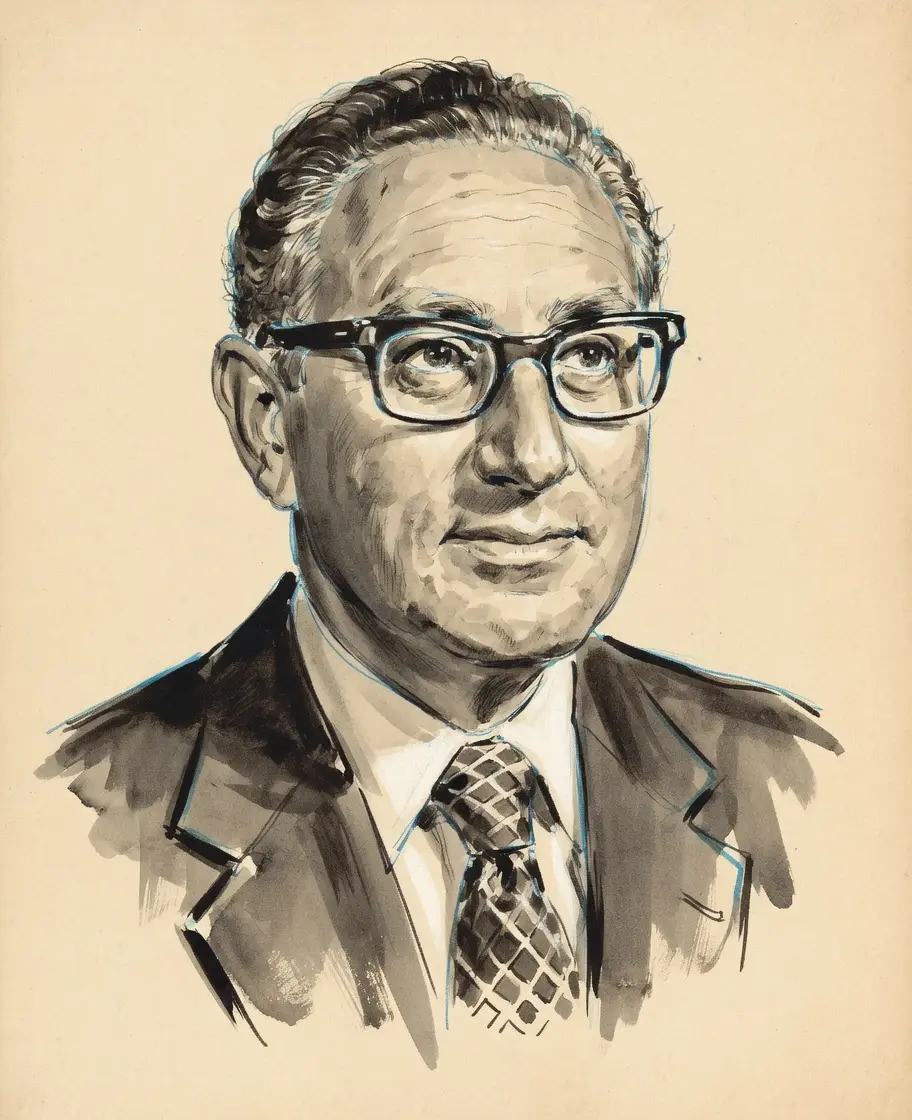
Henry Kissinger on Afghanistan
TL;DR
Henry Kissinger advocated for a disciplined, strategic U.S. withdrawal from Afghanistan, criticizing the nation-building aims of the later engagement.
Key Points
The U.S. failure in Afghanistan was rooted in mission creep beyond initial counter-terrorism aims into expansive nation-building.
He argued that America should not abandon its strategic interests in the region, implying a need for a stable post-withdrawal environment.
The former official criticized the concept of open-ended engagement that invites strategic overextension on the part of the United States.
Summary
Henry Kissinger's position on Afghanistan, particularly following the 2001 invasion, centered on a critique of the long-term U.S. commitment, which he viewed as lacking a coherent strategic objective beyond initial counter-terrorism goals. He expressed the view that America failed in Afghanistan because its goals, especially nation-building, exceeded its capacity and long-term willingness to sustain the effort, leading to an inevitable, costly exit. He argued that while the U.S. engagement was justified initially to dismantle al-Qaeda's base, the mission drifted into an unsustainable endeavor that damaged American credibility.
The former Secretary of State suggested that the withdrawal should have been managed with a clearer understanding of regional realities and a firm deadline, rather than an open-ended commitment that invited strategic overextension. He implied that the failure to define a limited, achievable end-state meant the U.S. was destined to leave under unfavorable circumstances, a situation he believed could have been mitigated by earlier, more disciplined statecraft in defining the parameters of the involvement.
Key Quotes
“Unilateral withdrawal is not victory.”
But nation-building ran up against the irony that the Afghan nation comes into being primarily in opposition to occupying forces.
Frequently Asked Questions
Henry Kissinger concluded that the U.S. ultimately failed in Afghanistan because its ambitions expanded beyond the initial, justifiable counter-terrorism mission into an unsustainable nation-building project. He believed this mission creep damaged American credibility and led to a costly, forced exit.
While Kissinger did not explicitly state blanket support for the 2001 invasion, he recognized the initial necessity of dismantling al-Qaeda's base after the September 11th attacks. His later commentary focused on criticizing the protracted nature and expanded objectives of the subsequent engagement.
The former Secretary of State stated that the withdrawal should have been characterized by a disciplined, strategic approach with clearly defined goals from the start. He implied that an undisciplined exit was the predictable outcome of an undefined, long-term commitment.
Sources6
Henry Kissinger on Why America Failed in Afghanistan
Learn From Iraq, Don’t Abandon Afghanistan
Henry Kissinger and the History of U.S. Blowback in the Middle East
Kissinger on the Sad Strategic Reality of U.S. Engagement in Afghanistan
Memorandum of Conversation, December 1, 1969
The War in Afghanistan: Declassified Documents Show Early U.S. Diplomatic Moves and Intelligence
* This is not an exhaustive list of sources.