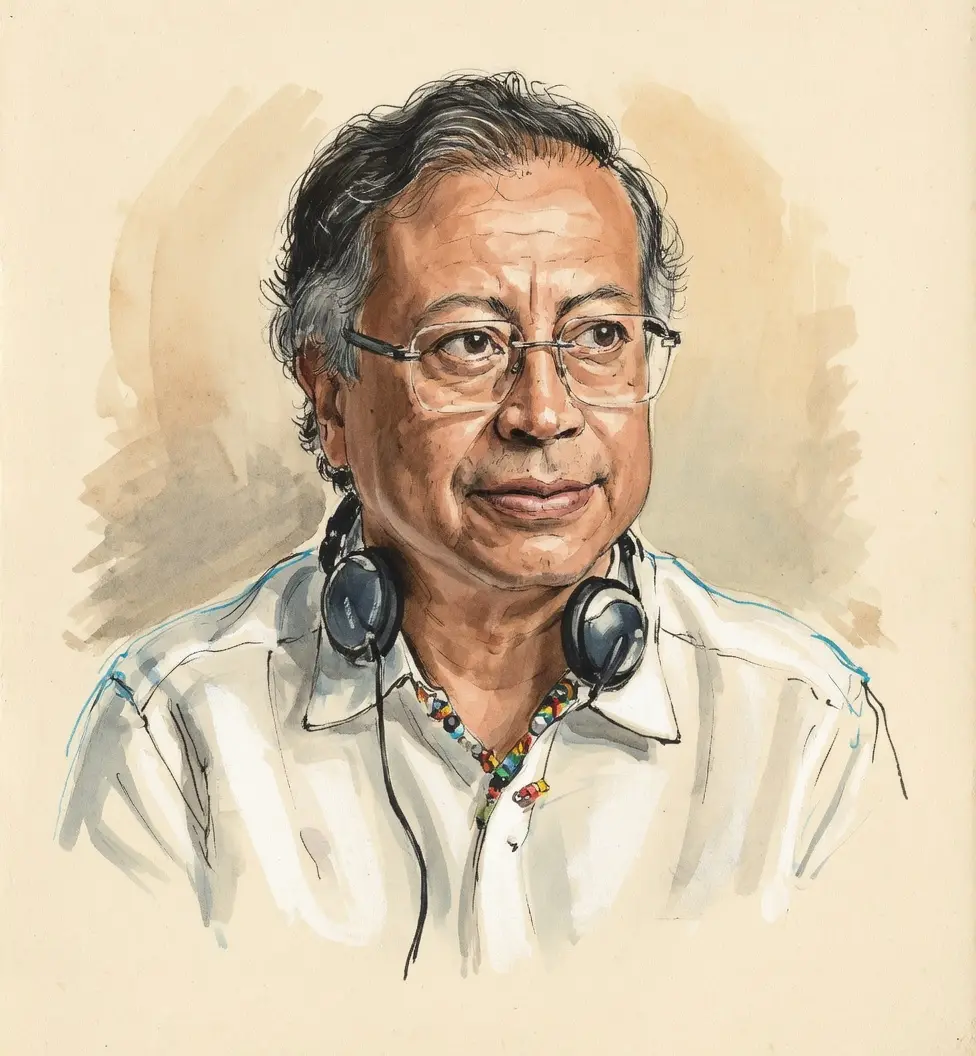
Gustavo Petro on United States
TL;DR
Gustavo Petro advocates for a revised, non-interventionist relationship with the United States focused on shared drug policy and climate action.
Key Points
He has sought to shift the bilateral focus from drug enforcement to cooperation on climate change.
His administration has expressed frustration over Colombia's exclusion from some U.S.-led anti-cartel alliances, complaining in early March 2026.
A White House visit in February 2026, occurring shortly after the inauguration of the current U.S. president, helped defuse months of diplomatic tension.
Summary
Gustavo Petro has consistently called for a fundamental shift in relations between Colombia and the United States, advocating for a move away from the historical focus on drug prohibition toward shared security and environmental priorities. The Colombian president has specifically criticized the long-standing U.S. War on Drugs, arguing that the focus on eradication and militarization has failed, a stance he often contrasted with former U.S. administrations. His approach emphasizes cooperation on climate change as a central pillar of engagement, positioning environmental sustainability as a key area for joint effort.
His administration has navigated periods of tension, particularly concerning drug policy divergences, which prompted high-level meetings aimed at recalibrating the bilateral agenda. This has included seeking to de-escalate friction over issues like extradition and cultivation policies, suggesting a pragmatic desire to maintain a working relationship despite policy disagreements. The ongoing need for security cooperation and economic ties means his position balances critique of past policies with a need for contemporary partnership with the current U.S. leadership.
Frequently Asked Questions
Gustavo Petro seeks a re-evaluation of the traditional U.S.-Colombia relationship, pushing for less emphasis on drug prohibition and more focus on areas like climate change. He maintains a strong voice criticizing past U.S. foreign policy approaches in Latin America while seeking functional cooperation.
Yes, his position has evolved from strong historical critique to a more pragmatic engagement aimed at securing cooperation on key priorities. While maintaining a critical view of past drug policies, his current focus is on establishing a working partnership with the sitting U.S. administration.
The Colombian president has been vocal in his view that the U.S.-led War on Drugs has failed to address the root causes of drug trafficking. Petro has controversially suggested that the prohibition of marijuana was a tool for protest, contrasting it with the power of cocaine capital.
Sources9
U.S. Treasury Targets Colombian Narcotics Network
Colombian President Petro's White House visit defuses months of tensions with Trump
Colombian President says weed was for protest, cocaine is the drug of capital
Ecuador’s Noboa says cooperation with U.S. vital against drug trafficking
Colombia complains over exclusion from US anti-cartel alliance
Trump, Colombia's Petro foes exploring thaw; Meet Tuesday
Colombia’s Petro to meet with President Biden at White House amid shifting drug policy talk
Petro’s White House Visit Signals a Tense Rapprochement With U.S.
Petro criticizes US drug policy
* This is not an exhaustive list of sources.