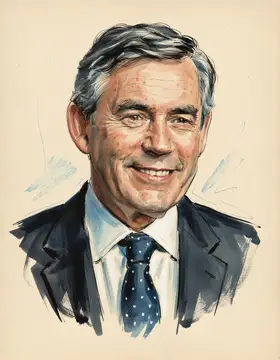
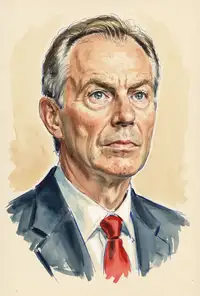

TL;DR
Gordon Brown felt he should have succeeded Tony Blair earlier, revealing a relationship marked by intense rivalry and difficult compromises.
Key Points
He admitted believing in 2010 that he should have been Prime Minister instead of Blair when Labour won in 1997.
He publicly shouted at Blair during a final confrontation in 2006 that the relationship had 'ruined my life'.
He expressed regret for not opposing Tony Blair over the decision to go to war in Iraq, citing other domestic battles.
Summary
Gordon Brown's position on Tony Blair is historically characterized by the intensely difficult and rivalrous partnership that defined much of their time leading New Labour. Brown openly admitted that he believed he should have become Prime Minister upon the party's 1997 election victory, not Blair, and that their relationship was "incredibly difficult" due to clashes and a complex succession deal that was not honoured as he understood it. This dynamic involved both shared political instincts during the party's reform and subsequent governing successes, contrasted sharply with internal battles over policy and power control.
This complex relationship evolved from what was once a close political 'kinship' into a corrosive rivalry that ultimately facilitated Blair's departure in 2007. A significant point of divergence was Brown's later regret over not more forcefully opposing the Iraq War, an issue he felt constrained from fighting due to his ongoing battles with Blair over domestic policy. Despite the public animosity and resentment, there were acknowledgements of their complementary skills that drove early New Labour success, making the overall dynamic a key cautionary tale in British political history.
Key Quotes
"You put fucking Milburn up to it,"
"In 2002 and 2003 I was on the road to a head-on collision with Tony over three matters: the euro, the NHS and tuition fees. All coincided with our decision to go into Iraq. Embroiled in these battles, I was, rightly or wrongly, anxious to avoid a fourth area of dispute"
Frequently Asked Questions
Gordon Brown's view is complex, reflecting a relationship that ranged from close political partnership to bitter personal rivalry. He felt they were inseparable for over a decade, but their time in government was marked by intense conflict over the leadership succession and policy direction.
Yes, his stance appears to have evolved, particularly in reflecting on the past. While the relationship was clearly fraught during their time in office, Brown has since made candid admissions about his own regrets, such as regarding the Iraq War decision.
Gordon Brown asserted that there was an agreement for Blair to stand down after two terms, which he felt was broken. This disagreement over the succession plan was a central point of tension that coloured their entire relationship.
Sources7
Gordon Brown shouted 'you ruined my life' at Tony Blair
Kinship to Daggers Drawn: Tony Blair and Gordon Brown
Gordon and Tony : r/TheRestIsPolitics
Gordon Brown: I should have been PM not Tony Blair — History ...
Gordon Brown has admitted he regrets not opposing Tony Blair over the Iraq war
Gordon Brown regrets not opposing Tony Blair over Iraq war
UK politics: Tony Blair and Gordon Brown timeline
* This is not an exhaustive list of sources.