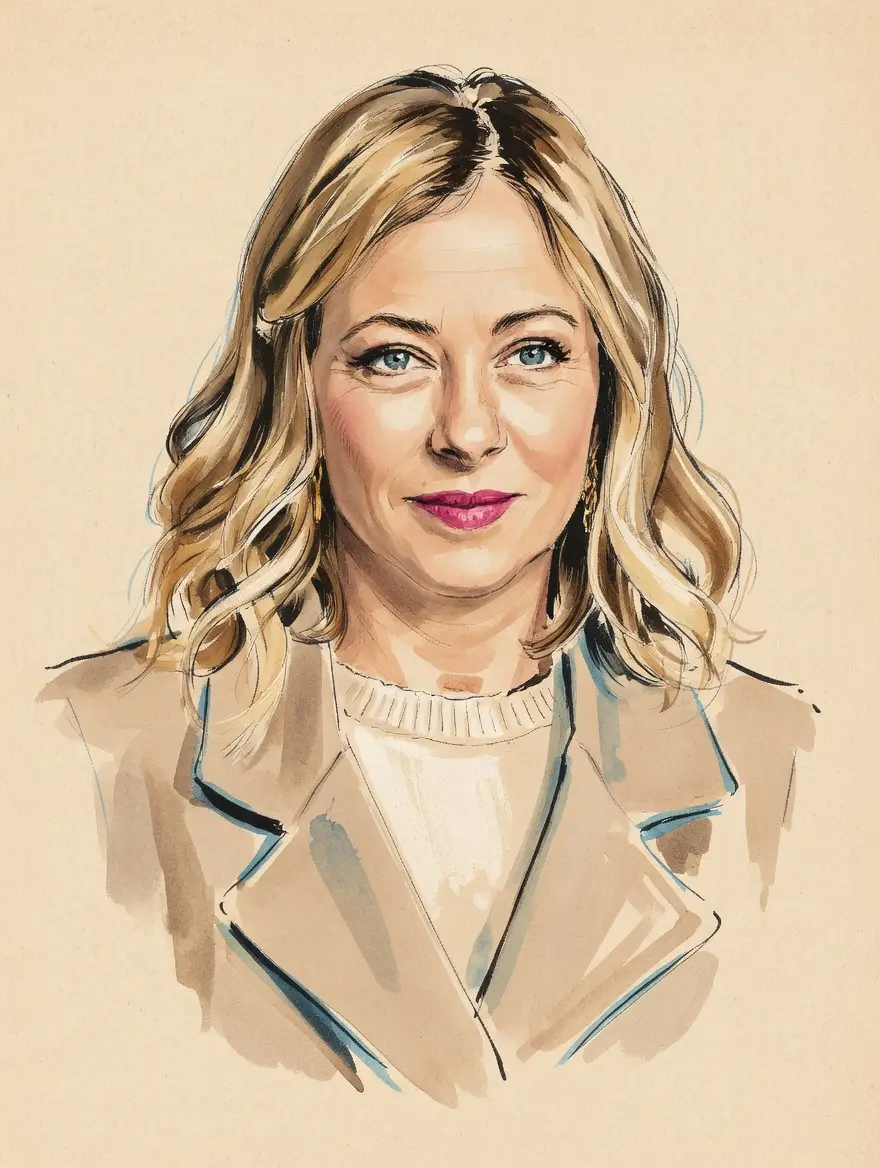
Giorgia Meloni on Religion
TL;DR
Giorgia Meloni strongly champions Italy's Christian heritage, framing it as central to national identity and traditional values.
Key Points
During her political campaign, Meloni famously stated her identity included being a Christian.
Her government has vowed a return to what it terms 'Christian' values in national governance.
A mural featuring a cherub resembling her in a Roman basilica was erased following controversy over mixing sacred space and politics in February 2026.
Summary
Giorgia Meloni asserts that declaring oneself a Christian in contemporary politics is a significant statement, deeply connecting her political identity to Italy's Christian heritage. She has previously used the self-description, "I am Christian," linking this faith identity with her broader platform of "God, Country, Family." This emphasis is used to defend traditional values, particularly against what she critiques as gender ideology and to frame national identity in cultural terms.
Despite this explicit invocation of religious values, analysts suggest Meloni's relationship with the Church may be more political than deeply devout, noting that she appears to follow a cultural Christianity that stops short of promoting strict Catholic moralization. While she maintains a cordial relationship with the Pope and finds common ground on social concerns like abortion and pro-family policies, her political maneuvers, such as invoking national identity alongside faith, have also led to controversies involving sacred spaces and politics.
Key Quotes
I am Giorgia, I'm a woman, I'm a mother … I'm Christian
No, I definitely don't look like an angel
Frequently Asked Questions
Giorgia Meloni's core position is a strong promotion of Italy's Christian heritage as a fundamental component of its national identity. She frequently references God and family as pillars of her political platform, connecting national identity with religious tradition.
While she operates within Italy's established relationship between the state and the Church, her rhetoric emphasizes the role of Christian values in public life. Critics have noted a tension, especially after a fresco resembling her in a church was removed due to concerns over political figures in sacred art.
Her public stance, emphasizing Christian identity alongside nationalism, appears consistent from her earlier political statements to her premiership. There is discussion among analysts regarding the depth of her personal religious devotion versus its utility as a political tool.
Sources6
Giorgia Meloni Just Drew A Hard-Line For Europe:If You’re Offended By A Crucifix Or Not, That’s Your Problem
Government In Italy Vows Return To 'Christian' Values
Giorgia Meloni & Secularizing Italy
What to Make of Meloni? | Commonweal Magazine
Italy's Giorgia Meloni As An 'Angel': When Sacred Space Becomes A Political Mural
* This is not an exhaustive list of sources.