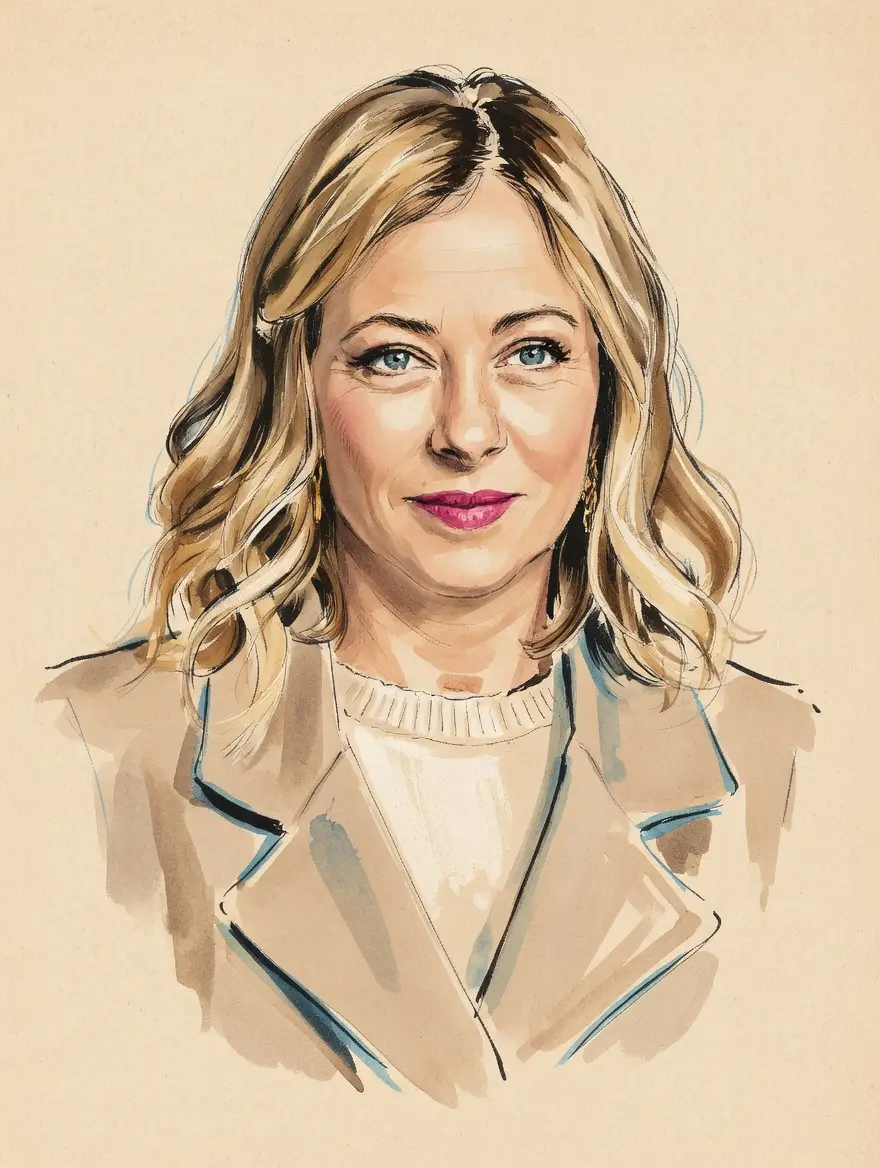
Giorgia Meloni on Putin
TL;DR
Giorgia Meloni asserts that Europe must resume high-level dialogue with Russia to effectively influence the Ukraine negotiations.
Key Points
She asserted in January 2026 that the time has come for Europe to talk to Russia to ensure a positive contribution to Ukraine negotiations.
She insisted that Italy, under her leadership, will never be the weak link of the West and remains strongly pro-NATO and pro-European.
She stated in October 2022 that any governing coalition member who does not agree with the cornerstone of being pro-NATO cannot be part of the government.
Summary
Giorgia Meloni, the Italian Prime Minister, publicly stated in January 2026 that the time has arrived for the European Union to engage in dialogue with Russia regarding the war in Ukraine. Her core position emphasizes that if the EU only negotiates with one party, its positive contribution to any eventual peace process will remain limited. This stance aligns with a call for a special European envoy to speak with one unified voice on the matter. This position is held while she maintains a staunch, long-standing support for Ukraine since the conflict began and affirms Italy's pro-NATO, pro-European commitment.
This call for dialogue appears to represent a shift or at least a nuanced addition to her prior firm stance, contrasting with earlier positions where she had warned political allies against close ties with the Russian President. While she urged Europe to talk to Russia, she simultaneously indicated that a swift return of Russia to the Group of Eight format remains impossible under current circumstances. Her emphasis is on European agency in negotiations rather than leaving the process solely to external powers.
Frequently Asked Questions
Giorgia Meloni currently believes that the European Union should resume high-level dialogue with Russia concerning the war in Ukraine. She argued that Europe's contribution to negotiations is limited if it only speaks with one of the involved parties.
Her position has shown evolution, particularly regarding direct engagement. While she has consistently maintained a firm, pro-Ukraine, pro-NATO foreign policy, she has recently advocated for European dialogue with Moscow, moving beyond purely issuing condemnation.
The Prime Minister indicated that under the current circumstances, a swift return of Russia to the G8 format would seem impossible. This suggests that while dialogue is encouraged, a full normalization of relations is not currently on the table.