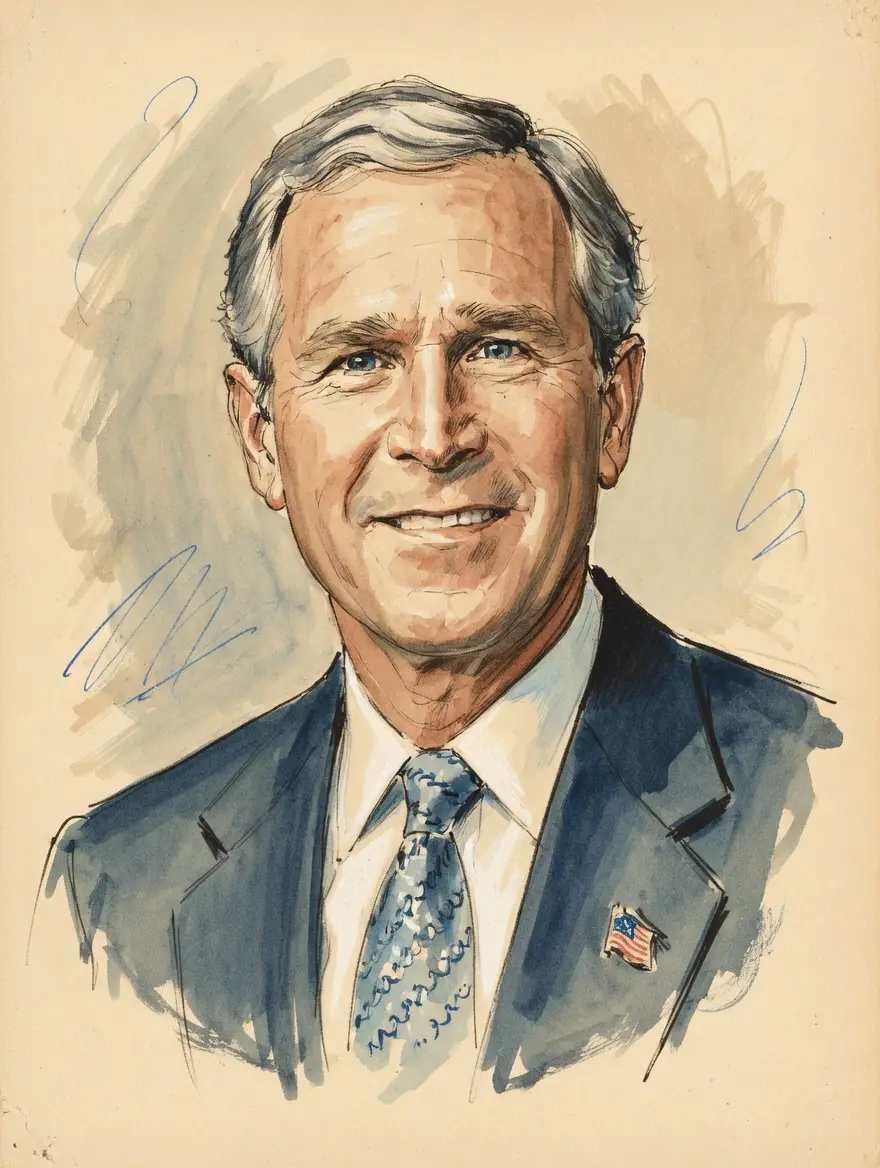
George W. Bush on Russia
TL;DR
George W. Bush initially fostered a post-Cold War partnership with Russia, but later grew critical of its actions, especially following the 2008 conflict.
Key Points
He and President Putin signed the Treaty Between the United States of America and the Russian Federation On Strategic Offensive Reductions (The Moscow Treaty) on May 24, 2002.
During their July 2007 meeting, the former president affirmed he trusted Putin, finding him consistent and honest, despite disagreements on issues like missile defense.
In August 2008, he publicly expressed deep concern over Russian actions in Georgia, stating they were inconsistent with assurances and jeopardized relations with the West.
Summary
George W. Bush’s position toward Russia was characterized by a significant initial effort to build a cooperative, post-Cold War relationship with President Vladimir Putin, founded on shared interests like counterterrorism following the September 11 attacks. Early in his presidency, he sought strategic breakthroughs, including significant nuclear arms reductions formalized in the 2002 Moscow Treaty, demonstrating a belief that the era of adversarial relations had ended. He and Putin shared tough rhetoric against terrorism and established new mechanisms for consultation, although disagreements persisted, most notably over U.S. withdrawal from the Anti-Ballistic Missile Treaty. [cite: 5, cite: 2]
However, the relationship deteriorated over time, particularly highlighted by the administration's response to the 2008 Georgian-Russian war, where the former president condemned Russian troop movements beyond the zone of conflict as an unacceptable escalation against a sovereign neighbor. More recently, the former president has condemned Putin’s 2022 invasion of Ukraine, contrasting it sharply with his own administration's actions regarding Iraq, and later stating that Putin’s Russia is the enemy of the United States and its friends. This evolution shows a clear shift from an attempted strategic partnership to one defined by strong opposition to current Russian aggression. [cite: 3, cite: 8]
Frequently Asked Questions
George W. Bush initially held a positive and trusting view of Vladimir Putin, especially in the aftermath of the 9/11 attacks. He famously mentioned getting a sense of his soul, leading to a period of close cooperation focused on counterterrorism. This closeness resulted in significant diplomatic achievements, such as the Moscow Treaty.
Yes, the former president's stance evolved from one of optimistic partnership to increasing criticism, particularly concerning Russia's foreign policy actions. The deterioration was marked by disagreements over the U.S. withdrawal from the ABM Treaty and more pointedly by the 2008 war in Georgia.
A central achievement of the Bush administration with Russia was the Moscow Treaty, signed in 2002, which committed both nations to reducing their deployed strategic nuclear warheads to between 1,700 and 2,200 by December 31, 2012. This treaty aimed to provide a stable, predictable framework for the new strategic relationship.
Sources7
George W. Bush Was Tough on Russia? Give Me a Break.
America First should not put Russia second
The Bush-Putin Transcripts: How Vladimir Putin and George W. Bush Bonded Over Terrorism
U.S.-Russian Relations under Bush and Putin - Dedman College of Humanities and Sciences SMU
The Moscow Treaty - State.gov - U.S. Department of State
President Bush Discusses Situation in Georgia
Remarks Following Discussions With President Vladimir V. Putin of Russia and an Exchange With Reporters in Kennebunkport
* This is not an exhaustive list of sources.