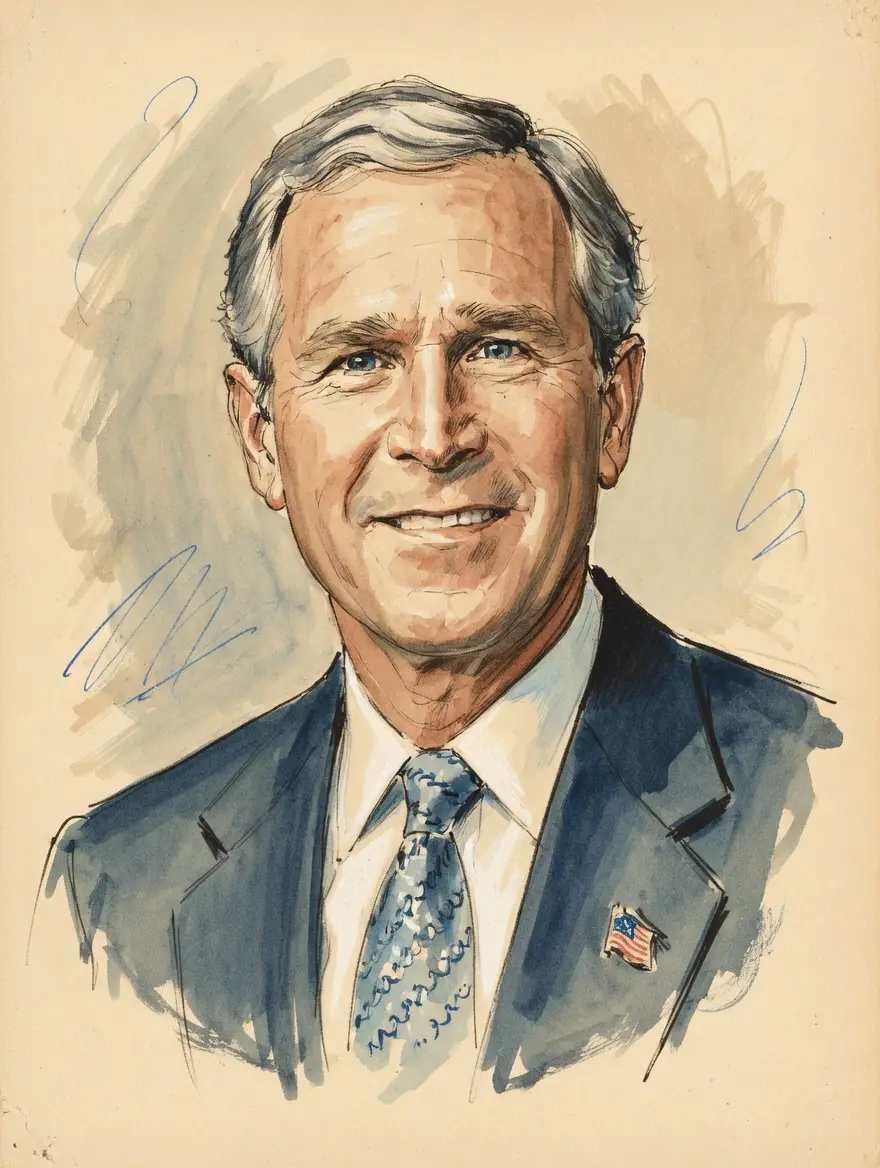
George W. Bush on Iraq
TL;DR
George W. Bush strongly advocated for and executed the 2003 invasion of Iraq to remove Saddam Hussein and eliminate alleged weapons of mass destruction.
Key Points
He signed the Authorization for Use of Military Force Against Iraq Resolution in October 2002, granting authority for the use of military force.
On March 19, 2003, he ordered the start of military operations, asserting the goal was to disarm Iraq and free its people from grave danger.
In January 2007, he committed to deploying over 20,000 additional American troops to Iraq, known as the "surge," to combat sectarian violence.
Summary
George W. Bush's core position regarding Iraq, established prior to and during his presidency, was that the regime of Saddam Hussein presented a grave and imminent danger to the United States and the world, primarily due to the pursuit of weapons of mass destruction (WMD) and alleged ties to terrorism. This stance, rooted in the post-9/11 security environment, led him to seek international support for military action, culminating in the authorization of Operation Iraqi Freedom on March 19, 2003, after an ultimatum for Hussein to leave expired. Key advisors reinforced the assessment that WMD existed, which formed the primary public rationale for the invasion, despite some internal skepticism and a lack of verifiable evidence, as evidenced by the administration's intense focus on intelligence related to WMD programs.
The invasion's initial objective was the swift toppling of the regime, which occurred quickly, leading the president to announce the end of major combat operations on May 1, 2003. However, the post-invasion phase immediately devolved into a complex insurgency and sectarian civil war, which required a strategic shift, notably the 2007 troop surge, to bring about greater security. The former president has since expressed that he was shocked when WMD were not found, though he has sought to justify the invasion on the basis that removing the vicious despot was ultimately for the safety of the world.
Frequently Asked Questions
The primary justification offered by President George W. Bush for the 2003 invasion of Iraq was the belief that Saddam Hussein possessed weapons of mass destruction (WMD) and posed a threat to the United States and its allies. He frequently argued that meeting this threat preemptively was necessary to prevent the weapons from being used. While the administration also cited Iraq's history of defying UN resolutions, the WMD concern was central to the public case for war.
Yes, the former president has indicated distress over the failure to find the alleged weapons of mass destruction, stating he had a "sickening feeling" about it that continues. More recently, he made a public gaffe where he appeared to equate the invasion of Ukraine with the invasion of Iraq, adding, "Iraq too," after correcting himself, which was interpreted by some as an acknowledgment of error. However, he has not issued a formal, unqualified apology for the decision to invade.
The eight stated objectives of Operation Iraqi Freedom included ending Saddam Hussein's regime, eliminating Iraq's WMD, finding and driving out terrorists, collecting intelligence on terrorist networks, and helping the Iraqi people transition to self-government. The initial phase focused on decisively eliminating the regime's capacity to wage war. The conflict, however, extended for years beyond the initial military success.
Sources7
'I mean Ukraine': George W Bush says Iraq invasion unjustified in speech gaffe – video
Bush 43 advisors on the war in Iraq | Miller Center
Poliheuristic Decision-Making Analysis: President George W. Bush and the Decision to Invade Iraq
9/11 and Iraq: The making of a tragedy | Brookings
Iraq War - Wikipedia
The Iraq War | George W. Bush Library
President Bush Addresses the Nation
* This is not an exhaustive list of sources.