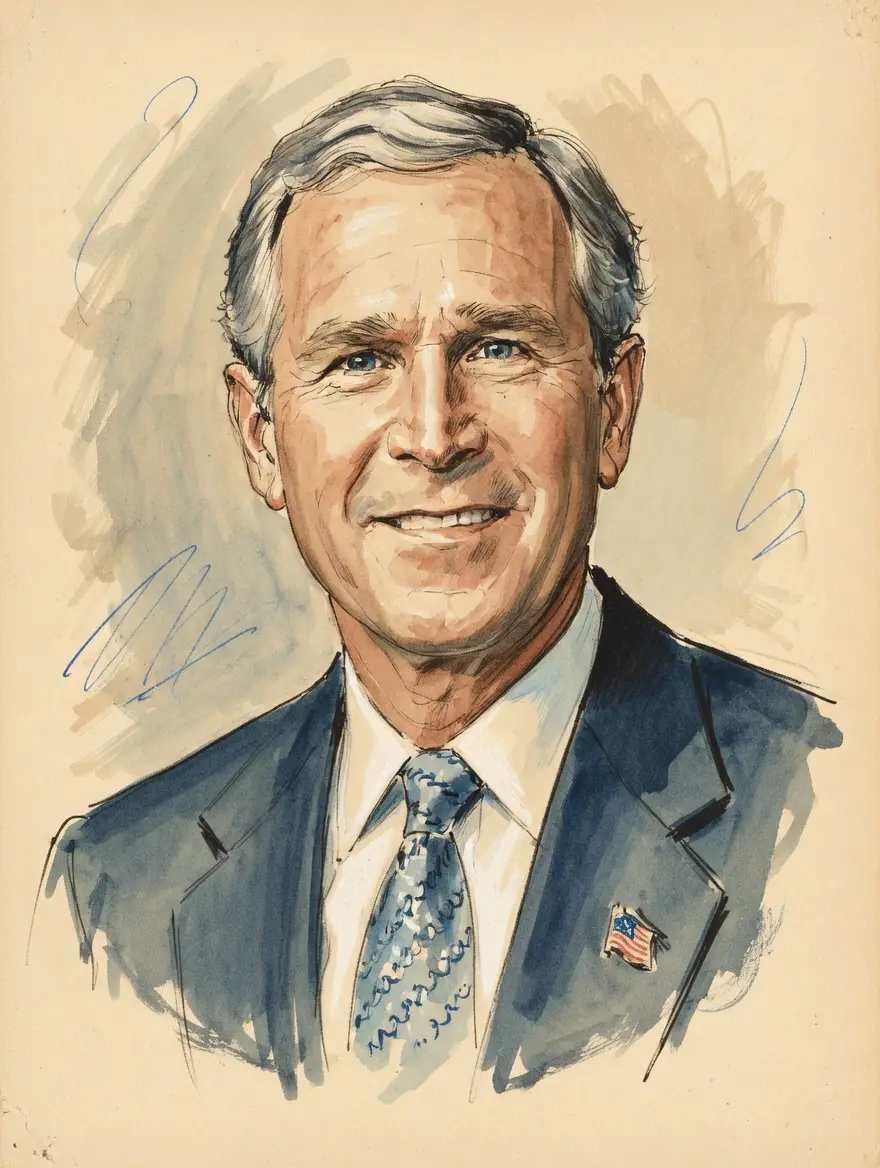
George W. Bush on George W. Bush Administration
TL;DR
George W. Bush generally stands by the consequential decisions of his administration, particularly those made after 9/11, while acknowledging areas for improvement.
Key Points
The administration enacted the No Child Left Behind Act in January 2002, increasing federal standards and testing in public education.
The President signed the Medicare Prescription Drug, Improvement, and Modernization Act in December 2003, creating Medicare Part D, the largest expansion of Medicare in forty years.
In response to the 2008 financial crisis, the administration pushed for and signed the Troubled Asset Relief Program (TARP) to stabilize the financial system.
Summary
George W. Bush largely defends the core framework and major initiatives of his administration, often contextualizing them within the unique challenges presented by the September 11, 2001, terrorist attacks and subsequent global conflicts. Former officials and the President himself have highlighted successes such as the creation of the Department of Homeland Security, the major educational reforms under the No Child Left Behind Act, and the President's Emergency Plan for AIDS Relief (PEPFAR) as significant achievements. While he and his team defend the necessity of the War on Terror and the decision to invade Iraq based on intelligence at the time, post-presidency reflection suggests he acknowledges strategic mistakes were made in the execution of the occupation.
In his post-presidency, the former president has maintained a low public profile regarding direct criticism of successors but has continued to defend key actions, such as his authorization of enhanced interrogation techniques if they saved lives, and he views his efforts to keep the nation safe as his greatest accomplishment. He has also expressed disappointment over his inability to pass major Social Security reform, which he considered a top domestic priority for his second term. Furthermore, officials associated with the administration have publicly defended the decision-making process, emphasizing that many key policies, such as the Iraq War rationale, were rooted in broader international community concerns beyond just the immediate 9/11 aftermath.
Frequently Asked Questions
George W. Bush views his tenure as transformative, particularly citing the initial response to the September 11 attacks as a defining moment. He generally stands by the major foreign policy decisions stemming from that event, even as historians debate the outcomes. He has expressed that his greatest accomplishment was keeping the country safe and his greatest failure was not achieving Social Security reform.
While maintaining a defense of the administration's core motives, especially post-9/11, the former president has acknowledged that strategic mistakes were made during the Iraq War occupation. He has also been described as having a low public profile where he stated he does not criticize his successor, which implies a cautious public stance on ongoing evaluation of his own tenure.
Former officials who served under George W. Bush have actively reflected on the presidency, often emphasizing successes like the President's Emergency Plan for AIDS Relief (PEPFAR) and the No Child Left Behind Act. They have also defended the administration's actions, arguing that key decisions, like the Iraq War, were based on the information and international context available at the time.
Sources8
George W. Bush - Wikipedia
The Contemporary Presidency: The Bush White House: First Appraisals
George W. Bush | George W. Bush Library
Presidential Oral Histories / George W. Bush
Everything Wrong with the George W. Bush Administration
17 Years Later: George W. Bush Administration Officials Reflect On His Presidency - The Jefferson Independent
Why was the George W Bush administration so intertwined with the Christian Right? : r/Presidents
* This is not an exhaustive list of sources.