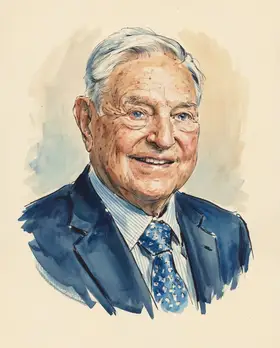
George Soros on Trading
TL;DR
George Soros's trading relies on his theory of reflexivity, making highly-leveraged, macro-based bets on market inefficiencies.
Key Points
His trading philosophy is rooted in his theory of reflexivity, which describes the interaction between market beliefs and market fundamentals.
He famously earned nearly $1 billion in September 1992 by selling short the British pound sterling just before its devaluation from the Exchange Rate Mechanism.
Soros utilizes a global macro trading strategy, making large directional bets on currencies, commodities, stocks, and bonds based on macroeconomic analysis.
Summary
George Soros is characterized as a short-term, speculative trader who employs a Global Macro strategy, centering his highly-leveraged bets on currency exchange rates, stocks, bonds, and derivatives based on comprehensive macroeconomic analysis. His signature philosophy, termed reflexivity, posits a reciprocal feedback loop where market participants' perceptions influence market outcomes, which in turn affect their subsequent behavior. This dynamic, he argues, makes financial markets inherently unstable and prone to booms and busts, contrary to conventional equilibrium-based economic theory.
His approach involves testing hypotheses with smaller investments initially and then increasing size and leverage, a process known as pyramiding, as the trade moves in his favor, while strictly adhering to risk management by cutting losses quickly when wrong. This strategy allowed him to profit significantly from identifying and betting against unsustainable market trends, such as the famous shorting of the British pound in 1992, which cemented his reputation as an astute, contrarian trader who discounts the obvious to profit from the unexpected.
Frequently Asked Questions
George Soros's main trading philosophy is based on his theory of reflexivity, which states that the perceptions of market participants influence market outcomes, and these outcomes, in turn, affect future perceptions. He believes this process makes markets inherently unstable and subject to self-fulfilling prophecies, creating trading opportunities.
Public accounts suggest that George Soros's primary trading decisions were driven by deep macroeconomic analysis rather than technical analysis, aligning with his global macro style. While his teams may have used charting to structure entries or size, his core thesis was based on fundamental imbalances.
He is known as a short-term, speculative trader who specializes in global macro strategies. This involves making large, highly-leveraged bets on the expected direction of major financial assets like currencies, stocks, and bonds based on big-picture economic analysis.
Sources7
The Crisis of (Confidence in) Global Capitalism Review
The World's Biggest Traders - George Soros
George Soros: His Trading Strategy and Philosophy
George Soros: 5 lessons on investing
How to invest like the best: how George Soros rewrote the rulebook
What Trading Legend George Soros Can Teach Us About Trading
[George Soros's Options Trading Strategy: A Legend of High Leverage and Precise Execution]
* This is not an exhaustive list of sources.