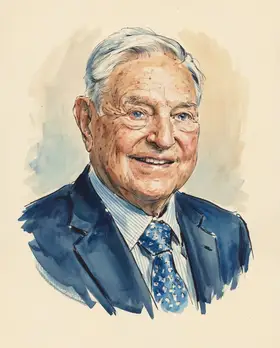
George Soros on Tariffs
TL;DR
George Soros historically argues against protectionism, viewing tariffs as the counsel of despair for global economies.
Key Points
In 1987, he stated that protectionism through tariffs and quotas is the counsel of despair.
He warned that imposing serious protectionist measures would be a precursor to negative market effects, referencing an eighty-point drop in the Dow Jones averages after a 1987 duty imposition.
He offered rare, specific praise for a former president's handling of one particular trade situation involving a major technology company in 2019.
Summary
George Soros has expressed opposition to protectionist measures, framing tariffs as a historically detrimental policy choice for global commerce. In an analysis from 1987, he specifically condemned protectionism like tariffs and quotas, citing the negative precedent of the Hawley-Smoot Tariff Act of 1930, which triggered retaliatory measures and caused US trade to decline sharply. He suggested that such barriers lead to reduced living standards globally and acknowledge a failure in economic leadership.
While his recent public stance on specific, modern tariff implementations is less frequently detailed, his foundational economic philosophy leans toward open international trade systems. His views often center on the complexity of global economic imbalances requiring coordinated international solutions rather than unilateral trade restrictions. He offered rare, conditional praise for one specific action by a former president concerning a single foreign entity amidst a broader trade conflict, though this was an exception rather than a general endorsement of tariff policy.
Frequently Asked Questions
George Soros generally opposes tariffs, describing protectionism as the counsel of despair for the global economy. He believes such measures lead to reduced living standards worldwide and acknowledge a failure in international economic management. His historical arguments focus on the negative consequences seen from past protectionist legislation.
Yes, George Soros offered rare, limited praise for a former president's handling of a specific international trade dispute involving a major technology company in 2019. However, this was an isolated instance amid broader criticism of that administration's economic policies.
He frequently cited the Hawley-Smoot Tariff Act of 1930 as a negative historical precedent against tariffs. Soros noted that the Act provoked retaliatory tariffs from foreign countries, which caused a sharp decline in US trade.
Sources6
Soros offers rare praise for Trump's handling of Huawei in trade war
George Soros foundation hits back at Trump after report that DoJ plans to target group
George Soros says Trump will fail and markets' dream will end
Harvard economist criticizes Trump's tariffs as 'ineffective'
A Global New Deal
Bessent says Trump, Soros are both impatient dealmakers
* This is not an exhaustive list of sources.