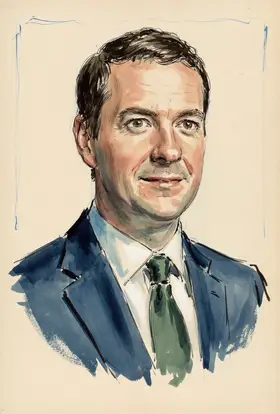
George Osborne on Austerity
TL;DR
George Osborne maintained that his austerity policies were an economic necessity required to rebuild fiscal space for future shocks.
Key Points
He claimed during the 2023 Covid-19 Inquiry that austerity was essential to rebuild fiscal space, completely rejecting claims it depleted health capacity.
The austerity framing used by his government strongly promoted values such as self-discipline and independence, while criticizing welfare recipients as 'skivers'.
The narrative employed by Osborne’s side focused on severe public debt reduction, contrasting with counter-narratives that accused him of using the deficit as an excuse to shrink the state.
Summary
George Osborne, as Chancellor of the Exchequer, strongly advocated for austerity, framing it as an essential policy to address public debt incurred by the previous government. His core position was that spending cuts were a necessary evil with no viable economic alternative, a narrative that often employed frames such as 'dangerous debt' and 'Britain is broke' to secure public acceptance. He maintained that this approach was crucial for rebuilding fiscal space, which he argued was necessary to provide scope for responding to future economic shocks, such as a pandemic.
Despite criticism that austerity led to depleted health and social care capacity and rising inequality, Osborne has largely stood by his decisions, even while expressing sympathy for those affected. His narrative involved promoting values like self-discipline and independence, contrasting 'strivers' against 'skivers' to justify cuts to welfare. Opponents argue that this policy choice, rather than necessity, resulted in weak growth and left the UK dangerously exposed to later crises, suggesting that his focus on debt reduction was a political agenda to shrink the state.
Frequently Asked Questions
George Osborne's core position, as Chancellor, was that austerity—the policy of significant public spending cuts—was an economic necessity. He asserted this was the only way to repay national debt and rebuild the 'fiscal space' needed to manage future economic shocks, according to analysis of his narrative. He consistently defended the policy as essential medicine for the economy.
George Osborne completely rejected the contention at the Covid-19 Inquiry that his austerity policies led to depleted health and social care capacity. Critics, such as the TUC, state he is trying to rewrite history by denying the harm caused by decimating public services. He maintained he tried to ring-fence funding for the NHS despite per capita cuts.
The narrative supporting George Osborne’s austerity involved frames like 'dangerous debt' and comparing the UK economy to a household that has maxed out its credit card, according to a report on economic framing. He also utilized the 'strivers and skivers' dichotomy to justify cuts to the welfare system.
Sources4
So, George Osborne, austerity was essential? Tell that to the children still suffering its terrible effects
So, George Osborne, austerity was essential? Tell that to the children still suffering its terrible effects
George Osborne is trying to rewrite history on austerity's harm | TUC
Framing the economy: The austerity story
* This is not an exhaustive list of sources.